
Platysoma coarctatum
LeConte, 1844
clown beetle
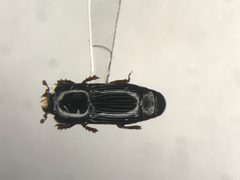
Platysoma coarctatum is a of clown beetle in the Histeridae. It is found throughout North America, with records across Canada and the United States. Like other members of the , it inhabits spaces under bark and is a of other insects.
Pronunciation
How to pronounce Platysoma coarctatum: //ˌpleɪtɪˈsoʊmə koʊˌɑrkˈteɪtəm//
These audio files are automatically generated. While they are not always 100% accurate, they are a good starting point.
Identification
Members of the Platysoma can be recognized by their flattened, oval body form and shortened that leave the tip of the exposed. The genus is distinguished from other histerid genera by its overall body shape and antennal structure. Specific identification of P. coarctatum requires examination of detailed morphological features including pronotal and elytral .
Images
Habitat
Inhabits spaces beneath bark of dead or dying trees, particularly in coniferous forests. Has been observed in association with logging operations and freshly cut pine logs.
Distribution
North America. Canada: Alberta, British Columbia, Manitoba, New Brunswick, Northwest Territories, Nova Scotia, Ontario, Prince Edward Island, Quebec, Saskatchewan. United States: widespread, recorded from Connecticut, Florida, Massachusetts, Maryland, Maine, New Hampshire, Oklahoma, Rhode Island, and other states.
Diet
. Preys on larvae of flies and beetles found under bark.
Behavior
Active in subcortical . Hunts prey under bark of dead wood.
Ecological Role
of other insects in forest . Contributes to of of fly and larvae in dead and dying wood.
Human Relevance
Encounters may occur in logging operations and forestry contexts. No significant economic impact documented; likely beneficial as a natural control agent of potential forest pests.
Similar Taxa
- Other Platysoma speciesShare flattened body form and bark-dwelling habits; require detailed examination for separation
- Other Histeridae generaSimilar size and predatory habits under bark; distinguished by body shape, elytral coverage, and antennal club structure
More Details
Taxonomic note
Catalogue of Life lists this as a synonym of Platysoma (Cylister) coarctatum, indicating placement in subgenus Cylister. GBIF recognizes the name as accepted.
Observation context
One of few documented observations of this comes from a Colorado logging mill, where it was found under bark of freshly cut Ponderosa Pine logs alongside numerous other species.