
Lopheros
LeConte, 1881
Species Guides
2- Lopheros crenatus
- Lopheros fraternus(net-winged beetle)
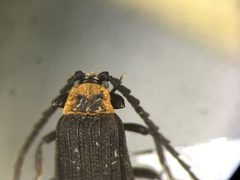
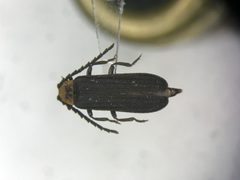
Lopheros is a of net-winged beetles ( Lycidae) established by J.L. LeConte in 1881. The genus contains approximately eight described distributed primarily in North America. Members of this genus exhibit the characteristic features of Lycidae, including reticulated and often aposematic coloration.

Pronunciation
How to pronounce Lopheros: //ˈlɒfəˌrɒs//
These audio files are automatically generated. While they are not always 100% accurate, they are a good starting point.
Identification
in Lopheros can be distinguished from other Lycidae by specific combinations of antennal , pronotal shape, and elytral reticulation patterns. The genus is placed in tribe Erotini, Erotinae. Definitive species-level identification requires examination of male genitalia and other fine structural characters.
Images
Distribution
North America. GBIF records indicate presence in Norway (NO) and Sweden (SE), though these may represent misidentifications or introduced specimens; the is primarily Nearctic in distribution.
Similar Taxa
- CalopteronAnother in Lycidae with similar net-winged appearance; distinguished by differences in antennal structure and pronotal .
- DictyopteraOverlapping distribution and similar elytral reticulation; separated by details of capsule and mouthpart orientation.
- ErosCongeneric in tribe Erotini; -level distinctions within Erotini require careful examination of genitalic and other fine characters.
More Details
Taxonomic History
The was established by John Lawrence LeConte in 1881. have been variously described by Germar (1824), Randall (1838), Gorham (1883), and Gyllenhal (1817), indicating a long history of taxonomic study. The Catalogue of Life places Lopheros in tribe Erotini, Erotinae, reflecting current classification within the diverse Lycidae.
Species Diversity
Approximately eight are recognized: L. crassipalpis, L. crenatus, L. fraternus, L. harmandi, L. konoi, L. lineatus, L. minimus, and L. rubens. iNaturalist records 571 observations for the , suggesting it is moderately well-documented by citizen scientists.