Phausis nigra
Hopping, 1937
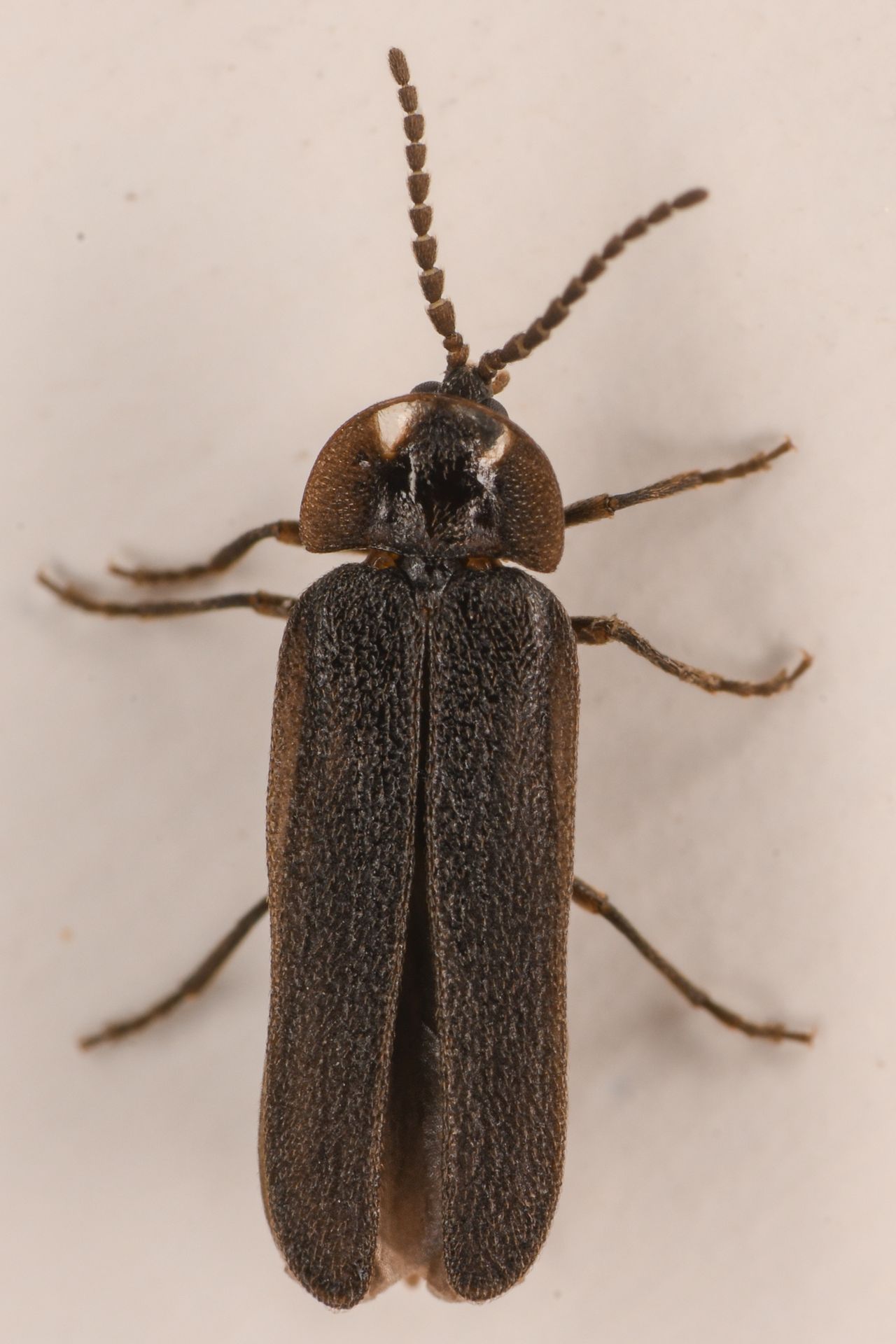
Phausis nigra is a of firefly in the Lampyridae, described by Hopping in 1937. It belongs to the Phausis, which includes other "shadow ghost" fireflies characterized by neotenic, wingless females that glow while -capable males lack lanterns. The species is found in North America, with records from British Columbia, Canada. Very little specific information has been published about this particular species.
Pronunciation
How to pronounce Phausis nigra: /ˈfaʊ.sɪs ˈniɡ.rə/
These audio files are automatically generated. While they are not always 100% accurate, they are a good starting point.
Identification
The Phausis is distinguished by extreme : males are winged and capable of but lack light-producing organs, while females are (wingless, retaining a larva-like body), neotenic, and possess a bioluminescent lantern. Without -level diagnostic information, P. nigra cannot be reliably distinguished from based on alone. The specific epithet "nigra" (Latin for "black") may refer to dark coloration.
Images
Distribution
North America; recorded from British Columbia, Canada.
Similar Taxa
- Phausis inaccensaAnother shadow ghost firefly in the same with identical strategy (wingless glowing females, winged non- males). Differentiated by geographic distribution and subtle morphological features not detailed in available sources.
- Phausis reticulataCongeneric shadow ghost firefly; -level identification requires examination of specific morphological characters not provided in general sources.
More Details
Genus-level biology
While specific details for P. nigra are lacking, the Phausis is well-studied. Phausis fireflies are among the most sexually dimorphic insects known. Females are neotenic—retaining characteristics into adulthood—including a soft, elongate, larva-like body form, reduced , and functional bioluminescent organs. Males develop normally with hardened , functional wings, , and no light organs. This represents an extreme where females invest all metabolic resources into rather than structures.
Research gap
Phausis nigra appears to be among the least documented in its . The single iNaturalist observation and minimal literature references suggest it may be genuinely rare, cryptic, or simply overlooked due to the difficulty of detecting these fireflies. Most ecological knowledge of Phausis derives from studies of P. inaccensa and P. reticulata in the eastern United States.