
Xylophilus
Mannerheim, 1823
Species Guides
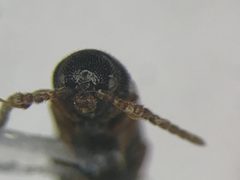
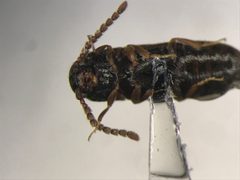
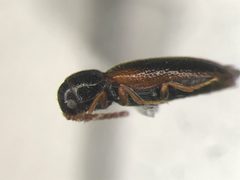
2Xylophilus is a of beetles in the Eucnemidae, first described by Mannerheim in 1823. The genus belongs to the tribe Xylobiini within the Melasinae. Eucnemidae, commonly known as false click beetles, are a family of elateroid beetles characterized by larvae that develop in decaying wood. The genus name Xylophilus (from Greek xylon "wood" and philos "loving") reflects an association with woody substrates. The name Xylophilus is also used for a bacterial genus (Willems et al. 1987), but this record refers to the genus.
Pronunciation
How to pronounce Xylophilus: //zaɪˈlɒfɪləs//
These audio files are automatically generated. While they are not always 100% accurate, they are a good starting point.
Images
Habitat
Has been observed in association with decaying wood and forested environments, consistent with -level of Eucnemidae.
Misconceptions
The name Xylophilus is shared between this and a bacterial genus (Xylophilus ampelinus, cause of grapevine bacterial blight). These are unrelated —one is an insect, the other a proteobacterium. Care must be taken to distinguish Xylophilus (Mannerheim, 1823) in Coleoptera from Xylophilus (Willems et al. 1987) in Betaproteobacteria.
More Details
Taxonomic authority conflict
Two distinct share the name Xylophilus with different authorities: Xylophilus Mannerheim, 1823 (beetles, Eucnemidae) and Xylophilus Willems et al., 1987 (bacteria, Burkholderiales). These are homonyms under different nomenclatural codes (Zoological vs. Bacteriological).
Data limitations
-level information for Xylophilus beetles is sparse in accessible literature. Most sources conflate or confuse the bacterial and uses of the name. The 16 iNaturalist observations for this provide limited verifiable biological detail.
Sources and further reading
- BugGuide
- Wikipedia
- iNaturalist taxon
- NCBI Taxonomy
- Catalogue of Life
- Small wasps to control a big pest? | Blog
- Population Ecology of Bursaphelenchus xylophilus
- Bursaphelenchus xylophilus . [Distribution map].
- Cohabitation of the pine wood nematode, Bursaphelenchus xylophilus, and fungal species in pine trees inoculated with B. xylophilus
- Xylophilus ampelinus (canker of grapevine).
- The effect of feeding behavior of Monochamus alternatus (Coleoptera: Cerambycidae) on the departure of pine wood nematode, Bursaphelenchus xylophilus (Nematoda: Aphelenchoididae)
- The effect of feeding behavior of Monochamus alternatus (Coleoptera: Cerambycidae) on the departure of pine wood nematode, Bursaphelenchus xylophilus (Nematoda: Aphelenchoididae)
- Étude des capacités de dispersion de Monochamus galloprovincialis vecteur du nématode du pin Bursaphelenchus xylophilus