
Hylis terminalis
(LeConte, 1866)
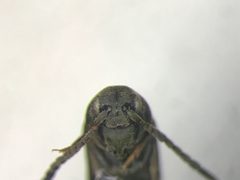
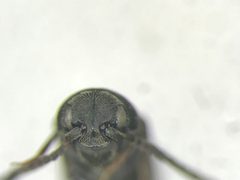
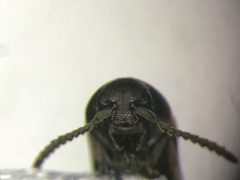
Hylis terminalis is a Nearctic of false click beetle ( Eucnemidae, Melasinae). It is one of six Hylis species recorded from the Nearctic region and was included in a 2024 taxonomic revision that provided imaging and diagnostic characters to distinguish it from including H. frontosus, H. olexai, and the newly described H. delicatus. The species is known from eastern and central Canada and the United States.
Pronunciation
How to pronounce Hylis terminalis: /ˈhaɪlɪs tɜːrmɪˈneɪlɪs/
These audio files are automatically generated. While they are not always 100% accurate, they are a good starting point.
Identification
Hylis terminalis can be distinguished from other Nearctic Hylis using characters detailed in the identification key of Otto, Bédard & Muona (2024). It differs from the European species H. olexai and from H. frontosus, H. delicatus, and H. irvinei in specific character states of the that are illustrated in that work. Females of H. terminalis are diagnosed in relation to H. olexai and H. delicatus in the same study.
Images
Distribution
Eastern and central North America. Canadian records: Manitoba, New Brunswick, Nova Scotia, Ontario, Prince Edward Island. United States distribution includes states in the northeastern and midwestern regions.
Similar Taxa
- Hylis frontosusNearctic with which H. terminalis was compared in the 2024 revision; both are native to the region and require morphological comparison for accurate identification.
- Hylis olexai European newly recorded in North America; H. terminalis is one of the species with which it is compared in diagnostic keys.
- Hylis delicatusNewly described Nearctic from 2024; H. terminalis is compared with this species in the identification key and female .
- Hylis irvineiNearctic included in female comparisons with H. terminalis.
Sources and further reading
- BugGuide
- GBIF taxonomy match
- iNaturalist taxon
- NCBI Taxonomy
- Meloidae Holdings | Entomology Research Museum
- Encyrtid Holdings | Entomology Research Museum
- Heliconiidae | Beetles In The Bush
- New species of Hylis des Gozis (Coleoptera: Eucnemidae: Melasinae) discovered in the Nearctic region along with the first North American records for Hylis olexai (Palm) and new distribution records