
Nematodes atropos
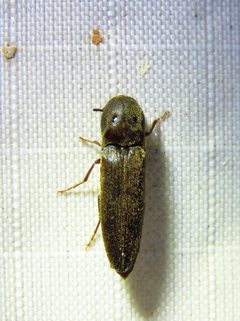
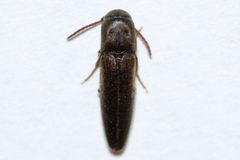
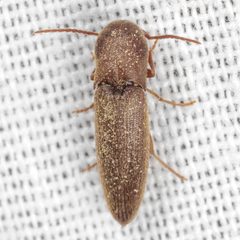
Nematodes atropos is a of false click beetle in the Eucnemidae. It belongs to the Nematodes, which is part of the order Coleoptera. The species is known from limited observations, with 6 records documented on iNaturalist. As a member of Eucnemidae, it shares family-level characteristics with other false click beetles, though species-specific remains poorly documented.
Pronunciation
How to pronounce Nematodes atropos: //nɛˈmætəˌdiːz ˈætrəˌpɒs//
These audio files are automatically generated. While they are not always 100% accurate, they are a good starting point.
Identification
Members of the Nematodes can be distinguished from true click beetles (Elateridae) by features of the prosternal process and mesosternal cavity, though specific diagnostic characters for N. atropos require examination of . The Eucnemidae is characterized by that lack the clicking mechanism found in Elateridae, and larvae that are typically wood-boring with reduced or absent legs.
Images
Distribution
Distribution data is limited; known from 6 observations on iNaturalist, though specific localities are not detailed in available sources.
Ecological Role
As a member of Eucnemidae, larvae likely function as wood-borers in decaying wood, contributing to nutrient cycling in forest . This inference is based on -level and has not been confirmed for this .
Similar Taxa
- Elateridae (true click beetles)Eucnemidae are frequently confused with Elateridae due to similar body form; they can be distinguished by the absence of a prosternal spine that fits into a mesosternal groove (the clicking mechanism) in Eucnemidae.
- Other Nematodes speciesCongeneric share similar and require detailed examination of genitalia or other subtle characters for definitive identification.
More Details
Taxonomic Note
The name Nematodes (established by Eschscholtz in 1831) predates the common use of '' for roundworms ( Nematoda), which can cause confusion. Nematodes is a genus, not related to nematode worms.
Data Limitations
-level information for N. atropos is extremely sparse in published literature. Most available information pertains to Eucnemidae or Nematodes broadly.
Sources and further reading
- BugGuide
- iNaturalist taxon
- More Nematodes in Outer Space? | Bug Squad
- Showcasing Animal and Plant Parasitic Nematodes | Bug Squad
- Don't Miss the Nematodes at UC Davis Biodiversity Museum Day | Bug Squad
- UC Davis Biodiversity Museum Day and the Fascinating World of Nematodes | Bug Squad
- Why You Ought to Be Concerned About Plant-Parastic Nematodes | Bug Squad
- Of French Fries, Couch Potatoes and Root-Knot Nematodes | Bug Squad