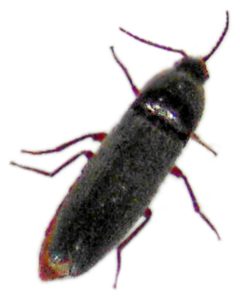
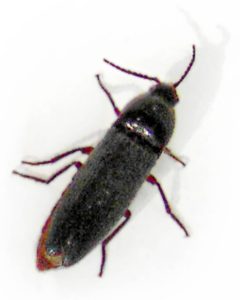
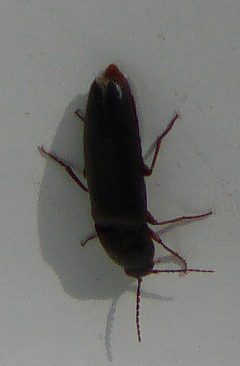
Ampedus nigrinus

Classification

Pronunciation

How to pronounce Ampedus nigrinus: /æmˈpiːdəs nɪˈɡraɪnəs/

These audio files are automatically generated. While they are not always 100% accurate, they are a good starting point.

Images

Summary

Ampedus nigrinus is a species of click beetle within the genus Ampedus, notable for its diverse habitat preferences and role in the ecosystem as both a wood feeder and pollen donor. They exhibit significant variability in size and coloration, and their life cycle involves distinct larval feeding habits and adult behaviors.

Physical Characteristics

North American species of Ampedus beetles vary in size from 3-4mm to 13-14mm. They are often bicolored with variable coloration, and can be identified by their downturned frontal carina and excavated prosternal sutures. Larvae are elongate, hard, and subcylindrical with a rounded ninth abdominal segment ending in a sharp point.

Identification Tips

Ampedus beetles can be identified by their complete, downturned, rounded frontal carina and excavated prosternal sutures. Larvae have pointed nasales featuring a single tooth.

Habitat

Primarily found in temperate forests, particularly in higher altitudes. Generalists that can inhabit both hardwood and softwood, as well as multiple tree species.

Distribution

Cosmopolitan distribution, mostly in the Holarctic region, including North America, Europe, and Asia.

Diet

Adults are pollen-feeders found on flowers and vegetation. Larvae feed on wood, especially in advanced stages of decay, and are also cannibalistic.

Life Cycle

Life cycle duration ranges from less than one year for smaller species to up to 4-5 years for larger ones. Larvae pupate in mid-summer and emerge as adults a few weeks later, remaining in the pupal cell through the winter.

Reproduction

Females attract males using chemical communication via specialized pheromone glands and lay eggs in fallen wood for larval development.

Conservation Status

Several species of European Ampedus beetles are considered endangered by the IUCN Red List, primarily due to threats from logging, wood harvesting, and salvage logging.

Ecosystem Role

Saproxylic beetles that contribute to wood decomposition and nutrient cycling in forest ecosystems.

Evolution

The genus was named by Pierre François Marie Auguste Dejean in 1833 and has been studied for its monophyly. Some studies indicate paraphyly with the genus Reitterelator nested within it. Megapenthes is the closest related North American genus.

Similar Taxa

Tags

  • beetle
  • Ampedus
  • Elateridae
  • Holarctic
  • conservation