
Gambrinus
Leconte, 1854
Species Guides
18Gambrinus is a of click beetles in the Elateridae, established by LeConte in 1854. in this genus were formerly classified under the genus Limonius. The genus contains approximately 20 described species distributed primarily in North America. These beetles are characterized by their elongated bodies and the ability to produce an audible clicking sound when righting themselves from a supine position.
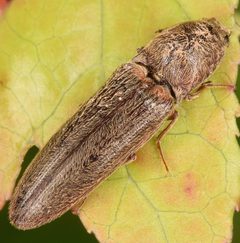
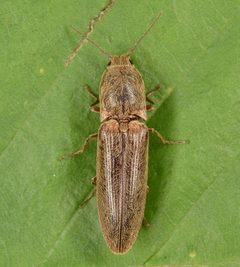
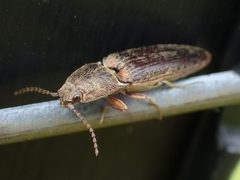
Pronunciation
How to pronounce Gambrinus: /ɡæmˈbraɪnəs/
These audio files are automatically generated. While they are not always 100% accurate, they are a good starting point.
Identification
Distinguished from the closely related Limonius by the form of the prosternal process and details of the mesosternal cavity. In Gambrinus, the prosternal spine fits into a mesosternal cavity that is margined and often posteriorly . Antennal structure, particularly the degree of pectination in males, provides additional diagnostic characters. -level identification requires examination of male genitalia and often relies on subtle differences in elytral and color pattern.
Images
Appearance
Elongate, parallel-sided beetles with cylindrical to slightly flattened bodies. are serrate to pectinate in males, to weakly serrate in females. Pronotum is typically longer than wide, with angles often produced and acute. are or punctate-striate, covering the entire . Body coloration ranges from brown to black, often with reddish or yellowish markings on the elytra. Size varies by , generally 10–25 mm in length.
Habitat
Found in diverse terrestrial including forests, grasslands, and agricultural areas. Larvae develop in soil, feeding on roots and organic matter. are often encountered on vegetation, under bark, or at lights at night.
Distribution
Primarily Nearctic in distribution, with most occurring in North America. Range extends from Canada through the United States, with greatest diversity in western and central regions. Some species have more restricted, regional distributions.
Seasonality
are active primarily during spring and summer months, with peak activity varying by latitude and . Some species exhibit extended activity periods from late spring through early autumn.
Life Cycle
Complete with , larva, pupa, and stages. Larvae are soil-dwelling, elongate, and cylindrical with hard, smooth , commonly known as wireworms. Larval development typically spans 2–4 years depending on and environmental conditions. occurs in soil , with adults emerging to feed, mate, and oviposit.
Behavior
possess a prosternal spine that engages with a mesosternal groove to produce a sudden, violent flexion of the body—an escape mechanism that produces an audible click and can propel the into the air. This clicking is used to right the beetle when on its back and to escape . Adults are and attracted to light. Larvae move through soil in search of food and moisture.
Ecological Role
Larvae function as soil decomposers and root feeders, contributing to nutrient cycling. Some are considered minor agricultural pests when larval feeding damages crop roots. are feeders on plant tissues and may serve as prey for birds, small mammals, and other insects.
Human Relevance
Some have larvae that damage roots of crops including corn, potatoes, and wheat, occasionally warranting management in agricultural settings. The is of interest to entomologists studying click beetle and the evolution of the clicking mechanism. No species are known to be of direct economic benefit.
Similar Taxa
- LimoniusFormerly included many now placed in Gambrinus; distinguished by prosternal-mesosternal junction structure and details of the mesosternal cavity.
- CteniceraShares serrate to pectinate and general body form; distinguished by differences in pronotal shape and prosternal spine structure.
- ActenicerusSimilar in size and coloration; separated by antennal structure and details of the prosternal process.
More Details
Taxonomic History
The was revised in the early 2000s, resulting in the transfer of numerous from Limonius to Gambrinus based on phylogenetic and morphological analyses. This reclassification resolved long-standing confusion in the classification of North American click beetles.
Etymology
The name Gambrinus references the legendary European king associated with beer and brewing, though the entomological application appears to be an independent usage rather than direct reference to the folkloric figure.