
Trypherus frisoni
Fender, 1960
Frison's Soldier Beetle
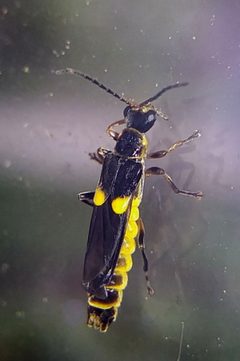
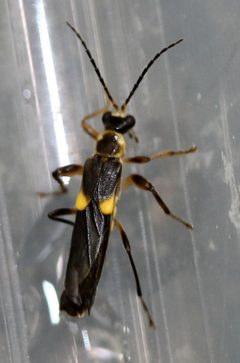
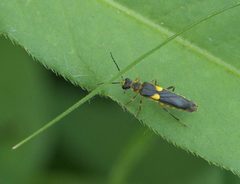
Trypherus frisoni is a soldier beetle in the Cantharidae, described by Fender in 1960. It is one of approximately 12 in the Trypherus, which is restricted to North America. The species is moderately well-documented with over 1,000 iNaturalist observations, suggesting it is relatively common and readily encountered by naturalists. Its honors an individual, presumably an entomologist or collector associated with its discovery or study.
Pronunciation
How to pronounce Trypherus frisoni: /ˈtrɪ.fɛ.rəs ˈfriː.soʊ.naɪ/
These audio files are automatically generated. While they are not always 100% accurate, they are a good starting point.
Identification
Members of Trypherus can be distinguished from other Cantharidae by their elongated, parallel-sided body form and relatively soft, flexible characteristic of soldier beetles. Specific identification of T. frisoni requires examination of male genitalia or detailed comparison of coloration and pronotal shape with such as T. latipennis and T. attenuatus. The genus Trypherus is distinguished from the similar Chauliognathus by generally more slender proportions and different antennal proportions.
Images
Distribution
North America, with confirmed records from Ontario, Canada and presumably throughout eastern and central United States based on iNaturalist observation .
Similar Taxa
- Trypherus latipennisOverlapping range and similar body form; distinguished by differences in pronotal shape and male genitalia structure.
- Trypherus attenuatusSympatric with comparable size and coloration; requires careful examination of elytral proportions and genitalia for definitive separation.
- Chauliognathus speciesBroadly similar soldier beetles in the same ; Trypherus are generally more slender with proportionally longer .
More Details
Taxonomic history
Described by Kenneth Fender in 1960, adding to a that had been relatively understudied. The specific epithet 'frisoni' likely honors Thomas H. Frison, an early 20th-century entomologist who worked extensively on aquatic insects and beetles of Illinois.
Data availability
Despite substantial citizen science documentation (1,091 iNaturalist observations), formal taxonomic and ecological literature on this remains sparse. Most biological details await dedicated study.