
Podabrus
soldier beetle
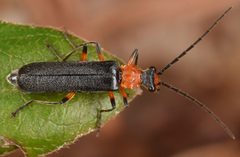
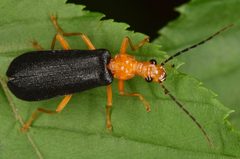
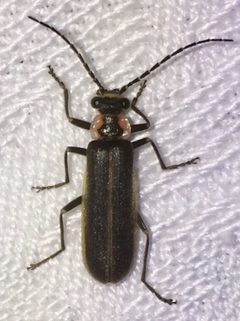
Podabrus is a of soldier beetles ( Cantharidae) found in California. Members are elongate beetles with soft, flexible wing covers that give rise to the 'leatherwings.' The genus is one of approximately 11 genera of soldier beetles occurring in California, with about 160 total in the state. are and frequently observed on flowers or foliage.
Pronunciation
How to pronounce Podabrus: /poʊˈdeɪbrəs sp i.ˈθriː mæs/
These audio files are automatically generated. While they are not always 100% accurate, they are a good starting point.
Identification
Distinguished from other Cantharidae by the combination of: pronotum wider than and wider than long; 11-segmented threadlike held forward of the body; head bent downward. Separated from the common genus Chauliognathus and Cantharis by these proportional and antennal characteristics. Soft, flexible distinguish soldier beetles from most other .
Images
Distribution
California; specifically noted as one of the common of soldier beetles in the state alongside Cantharis and Chauliognathus
Diet
and larvae are predatory; adults have been observed feeding on aphids and other honeydew-excreting insects
Behavior
are active during the day. When disturbed, adults may withdraw their legs and drop to the ground in a death-feigning response. Adults frequently found on flowers or leaves infested with aphids or other honeydew-excreting insects.
Ecological Role
of aphids and other soft-bodied insects; contributes to of pest
Human Relevance
Beneficial insects in gardens and agricultural settings due to ; featured in educational outreach by entomology programs (e.g., pumpkin carving demonstrations at UC Davis Bohart Museum)
Similar Taxa
- ChauliognathusAnother common California soldier beetle ; distinguished from Podabrus by differences in pronotum proportions and antennal positioning
- CantharisCommon California soldier beetle ; separated from Podabrus by morphological differences in pronotum shape and antennal characteristics
More Details
Defensive Chemistry
, larvae, and pupae can excrete noxious, defensive chemicals from specialized abdominal glands. The blackish and red coloration serves as aposematic warning to vertebrate that these beetles are distasteful.
Etymology
The 'soldier beetle' derives from the resemblance of the red and black coloration to the red coats of British soldiers during the American Revolution. The alternative common name 'leatherwing' refers to the soft, flexible texture of the .