
Peltastica
Mannerheim, 1852
tooth-necked fungus beetles
Species Guides
1Peltastica is a of small beetles in the Derodontidae, commonly referred to as tooth-necked fungus beetles. The genus was established by Mannerheim in 1852 and includes at least two described : P. tuberculata and P. amurensis. These beetles belong to the Peltasticinae and are associated with fungal . The genus is rarely encountered and poorly known biologically.
Pronunciation
How to pronounce Peltastica: //pɛlˈtæstɪkə//
These audio files are automatically generated. While they are not always 100% accurate, they are a good starting point.
Identification
Distinguished from other Derodontidae by the combination of tuberculate (in P. tuberculata) and the structure of the prosternal process. Within Peltasticinae, Peltastica differs from the related Peltastes by details of the prosternal tooth and elytral . Accurate identification to level requires examination of elytral tuberculation patterns and male genitalia.
Images
Appearance
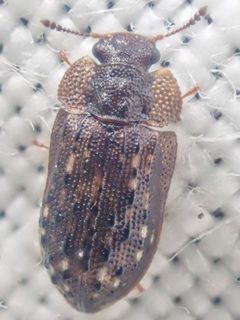
Members of Peltastica are small beetles with the characteristic 'tooth-necked' condition: the bears a tooth or projection that fits into a mesosternal cavity. The body is compact and somewhat convex. P. tuberculata is distinguished by tuberculate with raised, wart-like projections. General coloration tends toward brown to black.
Habitat
Associated with fungal substrates, including polypore fungi and decaying wood with fungal growth. Specific microhabitat preferences for P. amurensis remain undocumented.
Distribution
P. tuberculata has been recorded from northern Europe and Russia. P. amurensis is known from the Amur region of far eastern Russia and adjacent areas. The has a Palearctic distribution with disjunct suggesting relictual range patterns.
Diet
Presumed to feed on fungal mycelia and spores based on -level associations, though direct observations of feeding in Peltastica are lacking.
Ecological Role
Likely contributes to nutrient cycling in forest through consumption of fungal , though quantitative ecological data are absent.
Human Relevance
No known economic or medical significance. Occasionally collected by and mycophagous beetle researchers.
Similar Taxa
- PeltastesAlso in Peltasticinae with prosternal tooth; differs in elytral and body proportions
- DerodontusIn Derodontidae but in Derodontinae; lacks pronounced prosternal tooth and has different antennal structure
More Details
Taxonomic uncertainty
Sources disagree on the number of described : Wikipedia lists two (P. tuberculata and P. amurensis), while iNaturalist reports only one. This discrepancy may reflect recent synonymization or database lag.
Rarity in collections
Only 6 observations recorded in iNaturalist as of source date, indicating extreme rarity in field encounters and possibly genuine scarcity.