Tropiphorus terricola
(Newman, 1838)
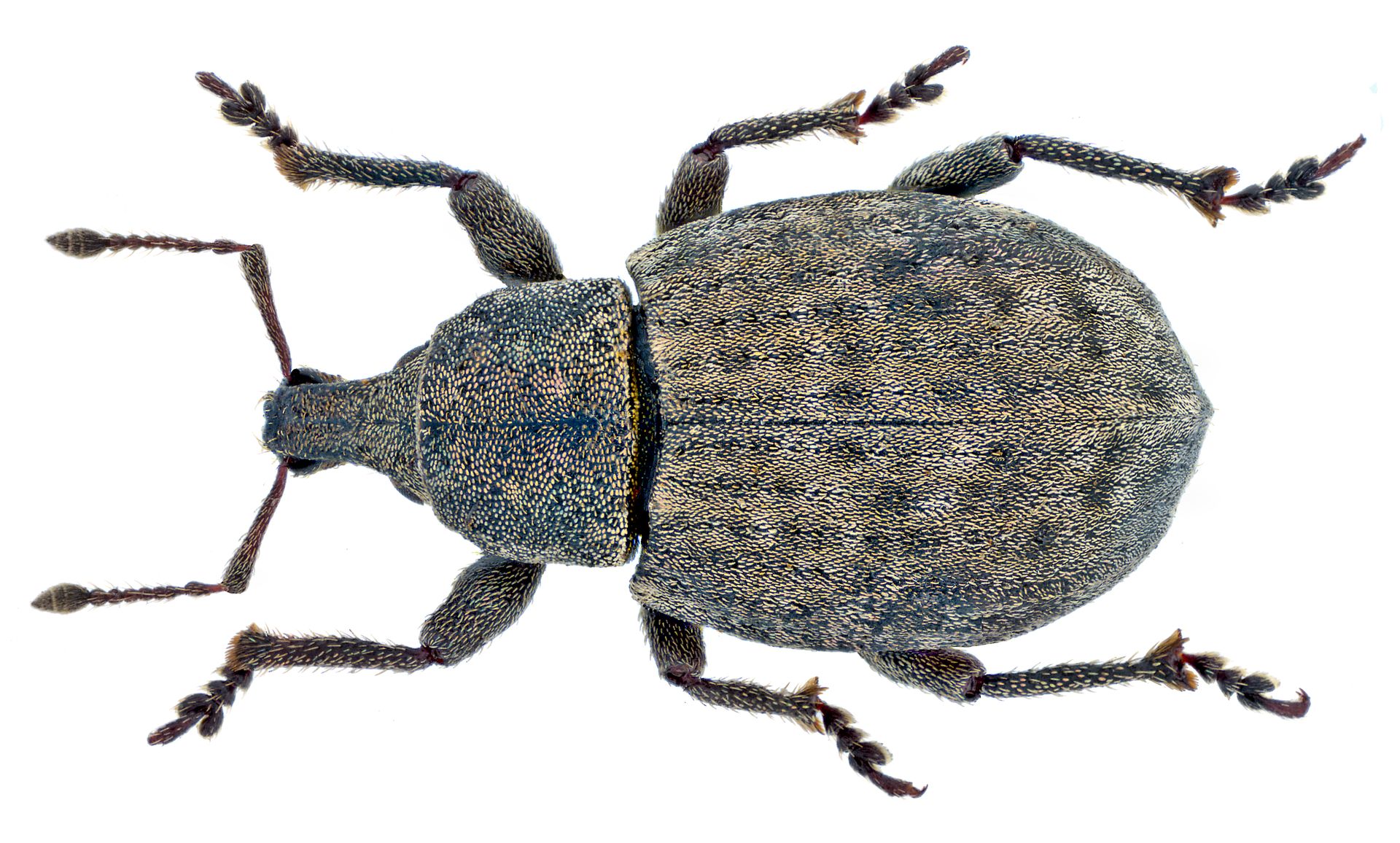
Tropiphorus terricola is a broad-nosed weevil in the Curculionidae. Native to northern Europe, it has been introduced to North America where it has been recorded in eastern Canada and the northeastern United States. The belongs to the Entiminae, a group characterized by their broad rostrums and root-feeding larvae.
Pronunciation
How to pronounce Tropiphorus terricola: //trɒˈpɪfərəs ˌtɛrɪˈkoʊlə//
These audio files are automatically generated. While they are not always 100% accurate, they are a good starting point.
Identification
As a member of the broad-nosed weevil Entiminae, T. terricola possesses a short, broad rostrum rather than the elongated snout typical of many other weevils. The Tropiphorus contains multiple ; precise identification to species level requires examination of genitalia and other subtle morphological characters. are likely small to medium-sized weevils with the compact body form typical of the tribe Byrsopagini.
Images
Distribution
Native to northern Europe with a broad distribution across that region. Introduced to North America, with confirmed records from New Brunswick, Newfoundland and Labrador, Nova Scotia, Prince Edward Island, and Québec in Canada.
Similar Taxa
- Other Tropiphorus speciesMultiple occur within the ; external often insufficient for reliable separation without detailed examination.
- Other Entiminae (broad-nosed weevils)Share the characteristic short, broad rostrum; distinguished by combination of body proportions, tarsal structure, and genitalia.
More Details
Taxonomic History
The was originally described by Newman in 1838. The Tropiphorus is classified in the tribe Byrsopagini within the Entiminae.
Introduction to North America
Like many European weevils, T. terricola has established in eastern North America, presumably through human-mediated transport. Canadian records span multiple provinces, suggesting it is well-established in that region.