
Dyslobus tumidus
(Casey, 1895)
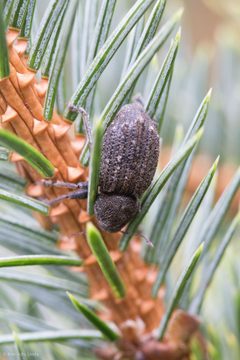
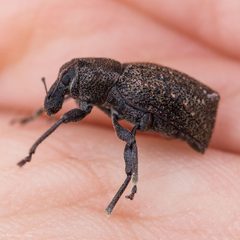
Dyslobus tumidus is a of broad-nosed weevil in the Curculionidae, tribe Byrsopagini. The species was described by Casey in 1895 and is known from California. Like other members of the , it is a flightless weevil with a compact, rounded body form. Available records are limited, with few documented observations.
Pronunciation
How to pronounce Dyslobus tumidus: /ˈdɪsloʊbəs ˈtjuːmɪdəs/
These audio files are automatically generated. While they are not always 100% accurate, they are a good starting point.
Identification
The specific epithet "tumidus" (Latin for swollen or inflated) may refer to a notably convex or swollen body profile, a trait that could distinguish this from . As a member of Byrsopagini, it likely exhibits the tribe's characteristic short, broad rostrum and compact body. Definitive identification requires examination of male genitalia and comparison with .
Images
Distribution
California, United States. Distribution records are sparse and localized.
Similar Taxa
- Other Dyslobus speciesDyslobus contains multiple in western North America; D. tumidus may be distinguished by body proportions and male genitalic structure, though specific diagnostic characters require taxonomic revision.
- Other Byrsopagini generaTribal placement in Byrsopagini separates Dyslobus from related entimine weevils; members of this tribe share short rostrums and often exhibit reduced wings.
More Details
Taxonomic note
The Dyslobus was revised by Van Dyke in 1936, but modern taxonomic treatment is limited. The epithet "tumidus" suggests a morphological distinction from related species, possibly in body convexity.
Data limitations
Only 12 observations are recorded in iNaturalist, indicating this is rarely encountered or underreported. Published biological data are essentially absent.