
Dirotognathus
Horn, 1876
Species Guides
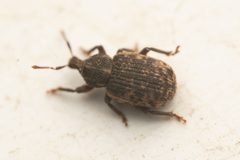
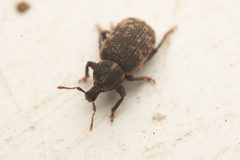
1- Dirotognathus sordidus(broad-nosed weevil)
Dirotognathus is a of broad-nosed weevils in the Curculionidae, established by Horn in 1876. The genus contains at least two described : D. punctatus (Hatch, 1971) and D. sordidus (Horn, 1876). As members of the Entiminae, these weevils possess the characteristic short, broad rostrum typical of broad-nosed weevils. The genus is placed in the tribe Byrsopagini. Very few observations exist in biodiversity databases, suggesting it may be rarely encountered or understudied.
Pronunciation
How to pronounce Dirotognathus: /ˌdaɪroʊtəˈɡneɪθəs/
These audio files are automatically generated. While they are not always 100% accurate, they are a good starting point.
Images
Distribution
Documented from North America based on descriptions; D. sordidus described from the United States, D. punctatus described from the Pacific Northwest region. Precise range boundaries remain undefined due to limited collection records.
Similar Taxa
- LepidophorusCatalogue of Life lists Dirotognathus as a synonym of Lepidophorus, indicating taxonomic uncertainty or historical confusion between these ; both belong to tribe Byrsopagini and share broad-nosed weevil
- Other Byrsopagini generaAll members of this tribe share the short, broad rostrum and general body form of Entiminae weevils; -level identification requires examination of genitalia and other fine morphological details
More Details
Taxonomic status
There is conflicting information regarding the taxonomic status of Dirotognathus. GBIF treats it as an accepted , while Catalogue of Life lists it as a synonym of Lepidophorus. This discrepancy reflects ongoing uncertainty in Byrsopagini .
Data scarcity
Only two observations are recorded in iNaturalist, and the is represented by just two described . This extreme data scarcity limits ecological and biological understanding.