
Pandeleteius hilaris
(Herbst, 1797)
Eastern Diamond-necked Weevil
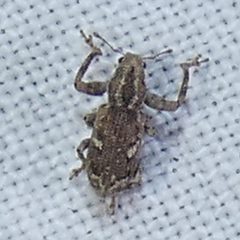
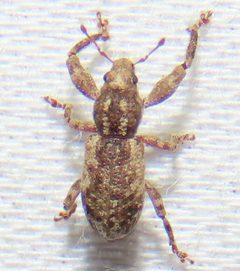
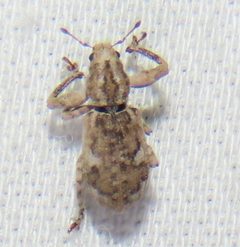
Pandeleteius hilaris is a of broad-nosed weevil in the Curculionidae, first described by Herbst in 1797. It is native to and distributed across eastern and southeastern North America. The species is commonly known as the Eastern Diamond-necked Weevil. As a member of the broad-nosed weevil group, it possesses the characteristic short, broad rostrum typical of this . Based on iNaturalist observations, it appears to be relatively well-documented in its native range.
Pronunciation
How to pronounce Pandeleteius hilaris: //ˌpændəˈliːtiəs hɪˈlɛərɪs//
These audio files are automatically generated. While they are not always 100% accurate, they are a good starting point.
Identification
Pandeleteius hilaris can be distinguished from other North American weevils by its broad-nosed rostrum , placing it in the Entiminae (broad-nosed weevils). The specific epithet "hilaris" and "Eastern Diamond-necked Weevil" may refer to distinctive coloration or patterning, but confirmation requires examination of or detailed taxonomic revisions. It should be distinguished from other Pandeleteius by geographic range and subtle morphological characters. Specimens from the eastern United States matching this general description and the should be compared against verified museum material for definitive identification.
Images
Appearance
As a broad-nosed weevil, Pandeleteius hilaris possesses a short, broad rostrum (snout) rather than the elongated rostrum seen in many other weevil groups. The "Eastern Diamond-necked Weevil" suggests distinctive patterning on the pronotum or neck region, though specific morphological details are not well-documented in available sources. are typical of small to medium-sized curculionid beetles.
Distribution
Pandeleteius hilaris is found in eastern and southeastern North America. Documented distribution records include: Alabama, Arkansas, Connecticut, District of Columbia, and Florida. The appears to be primarily distributed in the eastern United States, with the suggesting core occurrence in this region. The GBIF records indicate presence across a span of the Atlantic coastal and Gulf coastal states.
Similar Taxa
- Other Pandeleteius speciesCongeneric may overlap in distribution and require careful morphological examination to distinguish; the Pandeleteius contains multiple North American species that are morphologically similar.
- Other broad-nosed weevils (Entiminae)The short, broad rostrum is shared across the Entiminae, so members of this group may be superficially similar and require examination of specific characters to separate from P. hilaris.
More Details
Taxonomic Note
Pandeleteius hilaris was originally described by Herbst in 1797, making it one of the earlier-described North American weevil . The Pandeleteius is part of the large and diverse Entiminae, which contains many species with limited modern taxonomic study. The "Eastern Diamond-necked Weevil" appears to be in use on iNaturalist but its origin and specific reference are not documented in formal taxonomic literature available in the provided sources.
Data Availability
Most information about this comes from specimen records and basic taxonomic databases. Detailed biological studies, ecological research, and modern taxonomic revisions appear to be lacking in the accessible literature. The relatively high number of iNaturalist observations (770) suggests it is not rare, but this citizen science data has not been synthesized into formal research publications.
Sources and further reading
- BugGuide
- Wikipedia
- GBIF taxonomy match
- iNaturalist taxon
- NCBI Taxonomy
- A New Wasp Species? EGSA's Winning T-Shirt | Bug Squad
- Stinking Here and There: Invasive Stink Bug Goes From Crops to Homes
- Bug Eric: The Bagrada Bug
- New Article Reveals Life History Details of the Bagrada Bug
- Stink Bugs: New IPM Guide for Midwestern Corn, Soybean Growers
- Unlikely wasp enemy of a serious alien pest in North America named Idris elba | Blog