
Liophloeus tessulatus
(O.F. Müller, 1776)
chequered weevil
Liophloeus tessulatus is a European weevil in the Curculionidae, reaching approximately 10 mm in length. The was first described in 1776 and exhibits parthenogenetic at lower altitudes. are active from spring through late summer, while larvae develop on plant roots over a two-year period.
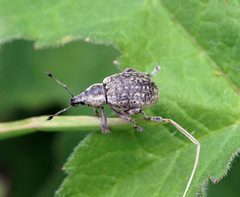
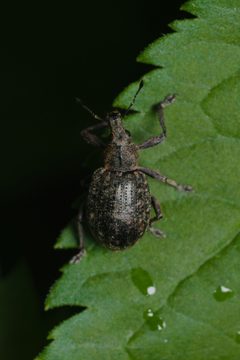
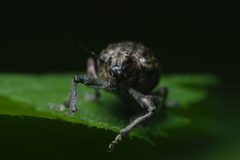
Pronunciation
How to pronounce Liophloeus tessulatus: //liˈɒfloʊ.əs tɛs.jʊˈleɪtəs//
These audio files are automatically generated. While they are not always 100% accurate, they are a good starting point.
Images
Distribution
Widespread across Europe, ranging north to southern Norway, central Sweden, and southern Finland. Distribution records also include Bashkortostan, Chelyabinsk, Chuvash, Kaliningrad, and Kirov in Russia.
Seasonality
are active from spring until late summer.
Diet
feed on a variety of wild plants including Creeping Thistle (Cirsium arvense), Cow Parsley (Anthriscus sylvestris), Hogweed (Heracleum sphondylium), Ivy (Hedera helix), and Colt's-foot (Tussilago farfara).
Host Associations
- Cirsium arvense - food plantCreeping Thistle
- Anthriscus sylvestris - food plantCow Parsley
- Heracleum sphondylium - food plantHogweed
- Hedera helix - food plantIvy
- Tussilago farfara - food plantColt's-foot
Life Cycle
Larvae develop on the roots of plants, taking two years to reach adulthood. The reproduces parthenogenically at lower altitudes.
More Details
Original description
First described as Curculio tessulatus by Otto Friedrich Müller in 1776. Later also described as Liophloeus schmidti by Boheman in 1824.