
Ophryastini
Lacordaire, 1863
Genus Guides
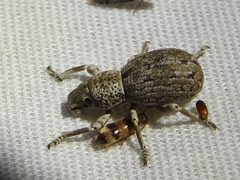
2Ophryastini is a tribe of broad-nosed weevils ( Entiminae) comprising approximately 90 across 4 extant and one extinct genus. The tribe was established by Lacordaire in 1863 and has a disjunct distribution spanning North America, Asia, and Europe. Members of this tribe are characterized by their broad snouts and root-feeding habits typical of Entiminae.
Pronunciation
How to pronounce Ophryastini: //ˌɒfriˈæstɪnaɪ//
These audio files are automatically generated. While they are not always 100% accurate, they are a good starting point.
Identification
Ophryastini can be distinguished from other Entiminae tribes by the combination of broad, short rostrum and specific tarsal claw structure. The Ophryastes is the most -rich and widespread; Deracanthus contains larger-bodied species with distinctive patterns. Sapotes is restricted to western North America. Definitive tribal-level identification requires examination of genitalic characters and pretarsal structures.
Images
Distribution
North America, Asia, and Europe. The Ophryastes is primarily Nearctic with some Palearctic representation; Deracanthus occurs in the Palearctic; Sapotes is restricted to western North America. The extinct genus Ophryastites is known from fossil deposits.
Similar Taxa
- Other Entiminae tribesOphryastini shares the broad rostrum and root-feeding common to Entiminae but differs in pretarsal claw and male genitalic structure; tribal boundaries in Entiminae remain under revision and some classifications may merge or split Ophryastini with related groups.
More Details
Taxonomic uncertainty
The tribal classification of Entiminae is historically unstable. Ophryastini has been variously circumscribed, and some authors have questioned its monophyly. The extinct Ophryastites, described by Scudder in 1893 from fossil material, provides limited information on tribal .
Extinct genus
The tribe includes one fossil , †Ophryastites Scudder, 1893, known from Tertiary deposits. Its placement in Ophryastini is based on superficial resemblance to extant Ophryastes and requires reevaluation with modern phylogenetic methods.