
Sitophilus
Schoenherr, C.J., 1838
Grain Weevils
Species Guides
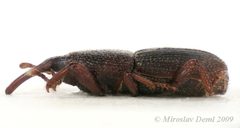
3- Sitophilus granarius(granary weevil)
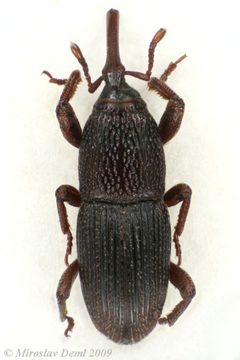
- Sitophilus oryzae(Rice Weevil)
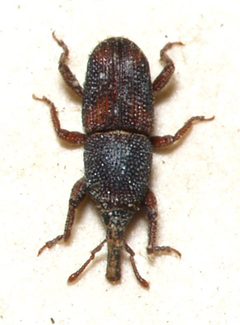
- Sitophilus zeamais(Maize Weevil)
Sitophilus is a of weevils comprising approximately 14 , several of which are major pests of stored grain, nuts, and seeds worldwide. The genus includes three of the most economically significant stored-product insects: the (S. oryzae), wheat weevil (S. granarius), and maize weevil (S. zeamais). are characterized by a pronounced rostrum and elbowed . Females bore into individual grains to deposit single , sealing the hole with secretion; larvae develop entirely within the grain, often leaving it hollow upon . Many species maintain intracellular symbiotic relationships with γ-Proteobacteria that supplement their nutrient-poor cereal diet.
Pronunciation
How to pronounce Sitophilus: //sɪˈtɒfɪləs//
These audio files are automatically generated. While they are not always 100% accurate, they are a good starting point.
Identification
Distinguished from other stored-product weevils by the combination of a well-developed rostrum, geniculate , and compact body. -level identification requires examination of subtle morphological characters: S. oryzae has four reddish or yellowish spots on and is capable of ; S. zeamais is similar but with more elongated body and larger average size; S. granarius lacks elytral spots, is flightless, and has a more rounded pronotum. Accurate species determination often requires dissection or molecular methods.
Images
Habitat
Primarily associated with stored grain products, including warehouses, grain elevators, mills, and domestic food storage. Natural occur in seeds and nuts of various plants, including acorns of oaks (Quercus spp.), seeds of Dipterocarpaceae and Fabaceae, and tamarind seeds. Thrives in warm, dry conditions typical of grain storage environments.
Distribution
in distribution, particularly in warmer regions. S. oryzae and S. zeamais occur throughout tropical and subtropical zones worldwide. S. granarius is restricted to temperate Palearctic regions, primarily Europe, where it replaces the other . Distribution closely follows human agricultural activity and grain commerce.
Seasonality
Continuous breeding in stored grain environments where temperature and humidity remain favorable; no distinct seasonal pattern in controlled storage. Field may show seasonal activity correlated with seed maturity and harvest.
Diet
Larvae feed exclusively on the endosperm of intact grain kernels, nuts, and seeds. feed on grain dust, damaged kernels, and may nibble intact grains. Documented include wheat, rice, maize, sorghum, oats, barley, rye, buckwheat, peas, cottonseed, cassava, pasta, and various tree seeds. Symbiotic bacteria provide and vitamins that compensate for nutritional deficiencies in cereal diets.
Host Associations
- Triticum aestivum - foodwheat
- Oryza sativa - foodrice
- Zea mays - foodmaize
- Quercus incana - foodbluejack oak acorns
- Quercus floribunda - foodmoru oak acorns
- Tamarindus indica - foodtamarind seeds
- γ-Proteobacterium - intracellular nutritional
- Beauveria bassiana - fungus
- Isaria fumosorosea - fungus
Life Cycle
Complete . Female bores hole in grain, deposits single , and seals opening with secretion. Larva hatches and feeds internally on grain endosperm, passing through several instars. Pupa forms within the grain cavity. emerges by chewing exit hole, often leaving grain hollow. Development time varies by and conditions: S. oryzae approximately 35 days, S. zeamais approximately 49 days at optimal temperatures. Adults may live several months; females produce 150–250 eggs over lifetime.
Behavior
Females exhibit precise oviposition , selecting intact grains and depositing single per grain. are negatively phototactic, preferring darkness in storage environments. S. oryzae and S. zeamais adults are capable of , enabling between storage facilities and field ; S. granarius is flightless, limiting dispersal to human-mediated transport. Adults are susceptible to high mortality from landscape fire smoke, particularly smoke from burning cow and neem leaves. Populations have developed resistance to synthetic chemical including malathion, with strains showing costs in the absence of insecticide exposure.
Ecological Role
Major economic pest of stored cereals worldwide, causing substantial post-harvest losses. Larval feeding reduces grain weight, quality, and germination viability. In natural , utilizing tree seeds may influence seed dynamics and forest . Serves as for fungi used in research.
Human Relevance
Among the most destructive pests of stored grain globally. cause direct economic losses through consumption of product, with and cadavers, and reduced grain quality. Regulatory targets for international grain trade. Control relies on combining , temperature manipulation, modified atmospheres, and chemical or biological treatments. Research focus for development of using fungi bassiana and Isaria fumosorosea.
Similar Taxa
- Tribolium spp. co-occur in stored grain but lack rostrum, have , and feed externally on grain dust rather than boring into intact kernels
- Rhyzopertha dominicaLesser grain borer is cylindrical with concealed from above, lacks prominent rostrum, and larvae feed externally in grain mass
- Oryzaephilus surinamensisSawtoothed grain beetle has distinctive saw-like thoracic projections and flattened body, feeds on damaged grain and does not bore into intact kernels
More Details
Symbiotic Bacteria
Multiple Sitophilus harbor intracellular γ-Proteobacteria in specialized bacteriocytes. The bacterium synthesizes and B vitamins that the weevil cannot obtain from its cereal diet, representing an obligate nutritional mutualism.
Fire Smoke Sensitivity
Research indicates S. oryzae experiences high mortality from landscape fire smoke, particularly smoke derived from burning cow and neem leaves, and from rice paddy burning with elevated carbon dioxide levels.
Sources and further reading
- BugGuide
- Wikipedia
- GBIF taxonomy match
- iNaturalist taxon
- NCBI Taxonomy
- Catalogue of Life
- New Meta-Analysis Examines How Landscape Fire Smoke Affects Insects
- BIOLOGI Sitophilus oryzae dan Sitophilus zeamais (COLEOPTERA; CURCULIONIDAE) PADA BERAS DAN JAGUNG PIPILAN
- Ιnteractions between Beauveria bassiana and Isaria fumosorosea and Their Hosts Sitophilus granarius (L.) and Sitophilus oryzae (L.) (Coleoptera: Curculionidae)
- Aspects of the biology of malathion resistant Sitophilus Oryzae (Linnaeus) (Coleoptera : Curculionidae)
- Chemical composition and insecticidal potential of bioactive fractions from Brucea antidysenteric (abalo) stem bark extract against Sitophilus zeamais.