
Acalles
Schoenherr, C.J., 1825
Species Guides
8- Acalles carinatus(hidden snout weevil)
- Acalles clavatus(hidden snout weevil)
- Acalles costifer
- Acalles indigens
- Acalles minutissimus
- Acalles porosus(hidden snout weevil)
- Acalles sulcicollis
- Acalles unnamed-fla
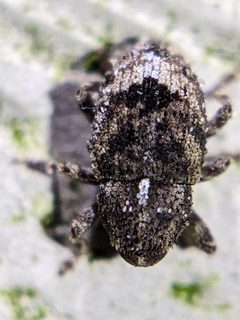
Acalles is a of small weevils in the Curculionidae, comprising approximately 470-570 . Members occur in the Western Palaearctic (Europe and Northwest Africa) and southeastern North America. These beetles inhabit leaf litter and dead woody debris, where they are easily overlooked due to their cryptic habits and small size. The genus has undergone significant taxonomic revision, with some species transferred to related genera such as Kyklioacalles.
Pronunciation
How to pronounce Acalles: /əˈkæl.iːz/
These audio files are automatically generated. While they are not always 100% accurate, they are a good starting point.
Identification
Acalles are small, compact weevils with the characteristic elongated rostrum of Curculionidae. Related such as Kyklioacalles (formerly included in Acalles) can be distinguished by male genitalia characters, particularly structure. Many species possess dense tufted on the pronotum and , with some showing pronounced lateral pronotal bumps. Accurate identification to species level requires examination of genitalic characters and often knowledge.
Images
Habitat
Leaf litter and accumulations of dead branches, twigs, and vines in forested environments. Some are specifically associated with particular tree , such as oak (Quercus), where they inhabit witches' brooms and epicormic shoot growths.
Distribution
Western Palaearctic (Europe and Northwest Africa) and southeastern North America. Records from Denmark, Norway, and Sweden confirmed.
Behavior
Members of the broader cryptorhynchine group to which Acalles belongs commonly feign death by folding the legs and tucking the rostrum into a groove.
Similar Taxa
- KyklioacallesFormerly included in Acalles; separated in 1999 based on male characters. Similar in general appearance and preferences.