
Aulacobaris lepidii
(Germar, 1823)
Imported Crucifer Weevil
Aulacobaris lepidii, commonly known as the Imported Crucifer Weevil, is a small weevil in the Curculionidae. It has been introduced to North America from Europe and is associated with plants in the mustard family (Brassicaceae). The species is part of a whose members are often recognized as seed-feeding weevils of economic concern.


Pronunciation
How to pronounce Aulacobaris lepidii: /aʊləkɒbɛərɪs lɛpɪdɪaɪ/
These audio files are automatically generated. While they are not always 100% accurate, they are a good starting point.
Identification
Distinguished from other small weevils by the combination of: association with Brassicaceae plants; compact body shape with moderately long rostrum; and specific genitalic characters visible only under magnification. Separation from congeneric requires examination of rostral , elytral , and male genitalia. The 'Imported Crucifer Weevil' distinguishes it from native North American Aulacobaris species.
Images
Appearance
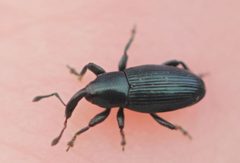
A small weevil with the characteristic elongated snout (rostrum) of Curculionidae. Body form is compact and somewhat cylindrical. Coloration is generally dark, though specific patterning details require specimen examination. are elbowed and arise from the rostrum. Size is typical for small baridine weevils, approximately 3-5 mm in length.
Habitat
Found in agricultural and where plants in the mustard occur. Associated with disturbed ground, field margins, and cultivated areas containing Brassicaceae.
Distribution
Native to Europe; introduced and established in North America. Documented from Belgium and Denmark in Europe. North American records include established in the United States and Canada.
Seasonality
activity coincides with flowering and seed set of plants, typically spring through summer. Specific varies by region.
Diet
Larvae develop within seeds of Brassicaceae plants. feed on foliage, flowers, or seeds of plants.
Host Associations
- Brassicaceae - primary Larval development in seeds; feeding on plant tissues
Life Cycle
Complete with , larva, pupa, and stages. Eggs are deposited in developing seed pods. Larvae feed internally on seeds, destroying them. occurs within the seed pod or in soil. Adults emerge to feed and overwinter, with multiple possible annually in favorable climates.
Behavior
are active on plants during daylight hours. When disturbed, they drop from vegetation and feign death. Larval feeding is entirely concealed within seed pods.
Ecological Role
Seed of Brassicaceae plants. In native range, contributes to natural of wild mustards. In introduced range, functions as agricultural pest reducing seed yield and quality.
Human Relevance
Recognized as a pest of oilseed crops (canola, rapeseed) and vegetable brassicas. Seed damage reduces crop value and can facilitate entry of secondary . Subject to monitoring and management in affected agricultural regions.
Similar Taxa
- Aulacobaris coerulescensNative European with similar size and associations; distinguished by rostral proportions and male genitalia
- Ceutorhynchus obstrictus (Cabbage Seedpod Weevil)Larger congeneric pest of brassicas with similar ; distinguished by larger size and different rostral shape
- Baris spp.Related baridine weevils with similar body form; distinguished by subtle differences in rostral and antennal insertion
More Details
Nomenclatural Note
The specific epithet 'lepidii' refers to the Lepidium (pepperweeds), an early-recognized plant. Germar's original description (1823) used the basionym Baris lepidii. The was transferred to Aulacobaris based on revised generic concepts in the Baridinae.
Introduction History
First detected in North America in the early 20th century; spread coincided with expansion of canola . Now established across much of the northern United States and southern Canada.