
Ithycerus noveboracensis
(Forster, 1771)
New York Weevil
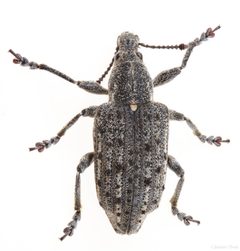
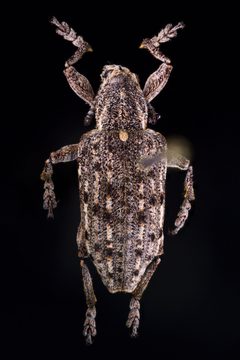
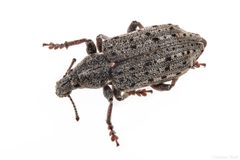
Ithycerus noveboracensis is a primitive weevil and the sole living member of the Ithyceridae. It is among the largest North American weevils, measuring 12–18 mm. The is characterized by its distinctive spotted coloration and bristly body texture. It occurs in deciduous forests of eastern North America, where feed on fungi and sap flows from hardwood trees.
Pronunciation
How to pronounce Ithycerus noveboracensis: //ˌɪθɨˈsiːrəs ˌnoʊvɛbɔˌɹeɪˈsɛnsɪs//
These audio files are automatically generated. While they are not always 100% accurate, they are a good starting point.
Identification
Distinguished from all other North American weevils by combination of: large size (12–18 mm); straight, non-geniculate with elongate clubs; short, broad rostrum; and distinctive spotted color pattern with bristly texture. Superficially resembles some large Curculionidae but antennae structure and rostrum shape are diagnostic. The only member of Ithyceridae in the region.
Images
Habitat
Deciduous forests, particularly mature hardwood stands. Associated with various hardwood trees including oaks (Quercus), hickories (Carya), and other broadleaf . found on trunks, branches, and around wounds or sap flows on living trees.
Distribution
Eastern United States and adjacent southern Canada. Records from Ontario, Québec, Vermont, and broadly across the eastern deciduous forest region.
Seasonality
active primarily during spring and summer months. Peak activity coincides with fungal fruiting and increased sap flow on trees.
Diet
feed on fungi (including bracket fungi and molds) and sap flows from hardwood trees. Specific larval diet unknown but presumed to develop in decaying wood or associated with fungal growth in tree cavities.
Host Associations
- Quercus - feeding site found on trunks and around wounds
- Carya - feeding site associated with sap flows
Life Cycle
Complete with , larva, pupa, and stages. Larval development presumably occurs in decaying hardwood or fungal substrates, though specific details of oviposition site and larval remain poorly documented. Adults are long-lived and may be found across multiple months.
Behavior
are slow-moving and often found in on tree trunks, particularly near wounds, sap flows, or fungal growths. or activity suspected but not well documented. When disturbed, adults may drop to the ground and remain motionless ().
Ecological Role
function as facultative mycophages, contributing to nutrient cycling by consuming fungal tissue. May serve as prey for forest-dwelling birds, mammals, and predatory insects. Larval suggests role in decomposer within hardwood .
Human Relevance
No significant economic impact. Occasionally noticed by naturalists and collectors due to large size and distinctive appearance. Not a pest of agriculture or forestry. Represents a phylogenetically significant lineage for studies of weevil evolution.
Similar Taxa
- Curculionidae (various large species)Large size and spotted patterns occur in some Curculionidae, but all possess geniculate (elbowed) with compact clubs and elongated rostrums—features absent in I. noveboracensis
- BrentidaeFormerly classified in Brentidae; brentids share straight but have more elongated, slender bodies and typically lack the dense bristle covering and spotted pattern of I. noveboracensis
More Details
Phylogenetic significance
Ithycerus noveboracensis is the only extant representative of the Ithyceridae, a lineage considered one of the most primitive among weevil superfamilies (Curculionoidea). Its morphological traits—particularly the straight , elongate fifth tarsomere, and short rostrum—are plesiomorphic features that have been lost or modified in the more derived Curculionidae. The family has a fossil record extending to the Eocene.
Taxonomic history
Historically placed in Brentidae or treated as a thereof; elevated to status based on phylogenetic studies. The specific epithet 'noveboracensis' refers to New York, where the was first described.