
Exapion
Bedel, 1887
seed weevils
Species Guides
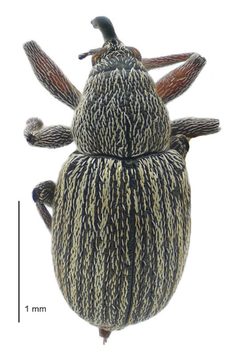
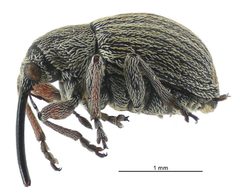
2- Exapion fuscirostre(Scotch broom seed weevil)
- Exapion ulicis(Gorse Seed Weevil)
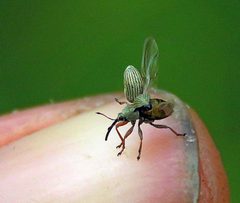
Exapion is a of straight-snouted weevils in the Brentidae. are specialized seed of leguminous plants, particularly members of the Fabaceae tribe Genisteae. Several species have been employed as agents against shrubs. The genus was separated from Apion based on morphological and genetic evidence.
Pronunciation
How to pronounce Exapion: /ɛkˈseɪ.pi.ɒn/
These audio files are automatically generated. While they are not always 100% accurate, they are a good starting point.
Images
Distribution
Native to the Palearctic region. have been introduced to North America, New Zealand, and Australia as agents. GBIF records indicate presence in Norway and Sweden.
Host Associations
- Ulex spp. (gorses) - E. ulicis and E. lemovicinum infest different Ulex at different seasons
- Cytisus scoparius (Scotch broom) - E. fuscirostre is a major seed
- Malva spp. - E. malvae associated with this
Ecological Role
Seed of leguminous shrubs. can significantly reduce seed production of plants; E. ulicis larvae have been observed destroying 91% of seeds within infested pods.
Human Relevance
Several introduced as agents for weeds: E. ulicis for gorse (Ulex europaeus) in western North America, New Zealand, and elsewhere; E. fuscirostre for Scotch broom (Cytisus scoparius) in Australia, New Zealand, and the United States.
Similar Taxa
More Details
Taxonomic history
Several Exapion were formerly classified in Apion. The genus is now placed in Brentidae, though some sources (e.g., NCBI) may still list it under Apionidae.
Ecological specialization
E. ulicis and E. lemovicinum demonstrate temporal isolation of reproductive periods and specialization to different gorse , representing a case of ecological speciation in sympatry.
Sources and further reading
- BugGuide
- Wikipedia
- GBIF taxonomy match
- iNaturalist taxon
- NCBI Taxonomy
- Studies on the biology of the Gorse Seed Weevil, Exapion ulicis (Forster 1771), in Northern California (Coleoptera: Curculionidae)
- Oviposition Decision of the Weevil Exapion ulicis on Ulex europaeus Depends on External and Internal Pod Cues
- Genetic divergence and ecological specialisation of seed weevils ( Exapion spp.) on gorses ( Ulex spp.)
- Effect of Scotch broom, Cytisus scoparius, pod size and patch density on Exapion fuscirostre (Coleoptera, Apionidae) seed weevil oviposition
- Pod fecundity of Ulex europaeus and seed loss due to predation by Exapion ulicis in northern California, USA