
Erirhinina
Genus Guides
4- Grypus(marsh weevils)
- Notaris(marsh weevils)
- Procas
- Tournotaris
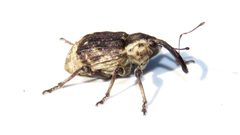
Erirhinina is a subtribe of weevils within the Curculionidae. Members are primarily associated with aquatic and semi-aquatic . The subtribe includes that feed on aquatic plants, with some exhibiting specialized adaptations for life in wet environments. Erirhinina is part of the tribe Erirhinini, which has undergone taxonomic revisions in recent decades.
Pronunciation
How to pronounce Erirhinina: /ˌɛrɪˈraɪnɪnə/
These audio files are automatically generated. While they are not always 100% accurate, they are a good starting point.
Identification
Erirhinina weevils are distinguished from other curculionid subtribes by a combination of rostral and antennal characters. The rostrum is typically slender and elongate, with inserted near the middle. generally exhibit reduced or modified tarsal structures compared to terrestrial weevils. Distinguishing Erirhinina from the related subtribe Tanysphyrina requires examination of genitalic and tarsal characters; definitive identification often necessitates dissection and reference to specialized taxonomic keys.
Images
Habitat
Aquatic and semi-aquatic environments including marshes, pond margins, slow-moving streams, and wetlands. Associated with emergent vegetation in freshwater systems.
Distribution
Widespread across the Holarctic region, with records from North America, Europe, and Asia. Distribution extends into northern Africa in the western Palearctic.
Seasonality
activity peaks during spring and summer months in temperate regions, coinciding with the growth period of aquatic vegetation.
Diet
Larvae and feed on aquatic and semi-aquatic plants, particularly members of Poaceae and Cyperaceae. Some are associated with watermilfoil (Myriophyllum) and other submerged macrophytes.
Host Associations
- Myriophyllum - food plantSome Erirhinina are associated with watermilfoil species
- Poaceae - food plantLarval and feeding on emergent grasses
- Cyperaceae - food plantSedge-associated documented
Life Cycle
Larvae develop within stems, roots, or submerged portions of aquatic plants. occurs in plant tissue or in submerged substrate. emerge to feed on aerial plant parts and mate. is closely tied to seasonal growth and of host vegetation.
Behavior
are capable of swimming or moving through dense aquatic vegetation. Some exhibit diving to access submerged plant tissues. Adults may be attracted to light.
Ecological Role
Herbivores that influence aquatic plant structure through direct consumption. Some may serve as food for aquatic including fish and waterfowl.
Human Relevance
Some Erirhinina have been investigated as agents for aquatic weeds, particularly watermilfoil (Myriophyllum spicatum). The North American weevil Euhrychiopsis lecontei has been introduced to other regions for this purpose.
Similar Taxa
- TanysphyrinaAlso aquatic/semi-aquatic weevils in tribe Erirhinini; distinguished by tarsal and genitalic characters, with Tanysphyrina generally having more reduced hind wings and different male genitalia structure
- Notaris historically placed in Erirhinina but now often treated separately; distinguished by broader rostrum and different antennal insertion
More Details
Taxonomic History
The classification of Erirhinini has been unstable, with various authors treating Erirhinina at different ranks or combining it with Tanysphyrina. Recent molecular and morphological studies support the recognition of Erirhinina as a distinct subtribe, though boundaries remain under investigation.
Biological Control Context
The subtribe includes the most widely studied agents for aquatic weeds in the Curculionidae. Research has focused on specificity and impact on target plants.