
Rhynchitini
leaf-rolling weevils
Genus Guides
6- Eugnamptus
- Haplorhynchites(head-clipping weevils)
- Involvulus(leaf and bud weevils)
- Merhynchites(Rose Weevils)
- Rhynchites
- Temnocerus
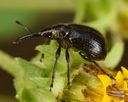
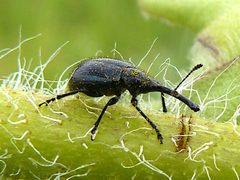
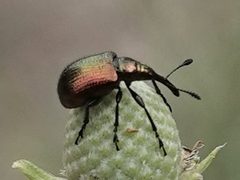
Rhynchitini is a tribe of small to medium-sized weevils within the Attelabidae, commonly known as leaf-rolling weevils. These beetles are characterized by their association with leaf manipulation , particularly the cutting and rolling of leaves to create protective shelters for their and larvae. The tribe contains numerous distributed across multiple continents, with most associated with broadleaf trees and shrubs.
Pronunciation
How to pronounce Rhynchitini: /rɪnˈkɪtɪnaɪ/
These audio files are automatically generated. While they are not always 100% accurate, they are a good starting point.
Identification
Distinguished from other Attelabidae tribes primarily by the structure of the rostrum and genitalia. The short to moderate rostrum separates Rhynchitini from the long-snouted Attelabini. Examination of male genitalia is often required for definitive identification. The combination of leaf-associated , compact body, and moderately sized rostrum helps distinguish members in the field from other small weevil .
Images
Habitat
Primarily associated with broadleaf deciduous and evergreen trees and shrubs. Found in forested , woodlands, parks, and gardens where plants are present. Larval development occurs within rolled or folded leaves, placing strict habitat requirements on the presence of suitable leaf material.
Distribution
Widespread across the Holarctic region, with significant diversity in North America, Europe, and Asia. Present but less diverse in the Neotropics and Afrotropics. Some have restricted regional distributions, while others span multiple continents.
Seasonality
activity generally coincides with the leafing period of plants, typically spring through early summer in temperate regions. Peak activity varies by latitude and local climate. occurs as adults in protected locations.
Diet
feed on fresh leaf tissue of plants, creating characteristic notches or cuts along leaf margins. Larvae feed internally within the rolled or folded leaf structures prepared by females.
Host Associations
- Quercus - oak commonly used
- Betula - birch commonly used
- Fagus - beech commonly used
- Prunus - cherry and related
- Rosaceae - various within
Life Cycle
Females cut leaves using specialized , then roll or fold the leaf sections to form a protective chamber. are deposited within these leaf rolls. Larvae develop inside the leaf structure, feeding on the enclosed tissue. occurs within the leaf roll or in the soil. emerge and may feed on foliage before seeking sites. Most appear to have a single per year in temperate regions.
Behavior
Leaf manipulation is the defining behavioral trait. Females use their to cut transverse or longitudinal slits in leaves, then manipulate the leaf section into a roll or fold. Some exhibit maternal care in the form of leaf preparation, though the extent varies among . are generally slow-moving and rely on when disturbed.
Ecological Role
Herbivores that cause minor to moderate defoliation of trees. Leaf rolls create temporary microhabitats that may be used by other small . The tribe contributes to nutrient cycling through leaf damage and serves as prey for various .
Human Relevance
Occasional minor pests of fruit trees and ornamental plantings, though damage is rarely economically significant. Some are noted in forestry contexts for defoliation of young trees. The leaf-rolling makes them subjects of natural history interest and educational study.
Similar Taxa
- AttelabiniAlso leaf-rolling weevils in Attelabidae, but distinguished by significantly longer rostrum and different leaf-rolling techniques
- ApoderiniRelated tribe in Attelabidae with similar habits; separation requires examination of rostral and leg structure
- CurculionidaeLarge of weevils with similar general form; Rhynchitini distinguished by leaf-rolling and shorter rostrum
More Details
Taxonomic History
Rhynchitini has undergone repeated taxonomic revision, with some authorities previously treating it as a separate Rhynchitidae. Current classification places it within Attelabidae based on molecular and morphological evidence.
Leaf-Roll Types
Different within Rhynchitini produce characteristic leaf-roll types: some form simple folded structures, others create cylindrical rolls, and some produce complex multi-layered nests. The roll architecture is often diagnostic to genus.