
Homoeolabus
Jekel, 1860
leaf-rolling weevils
Species Guides
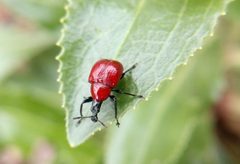
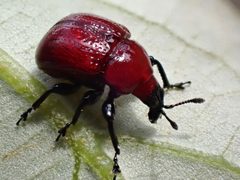
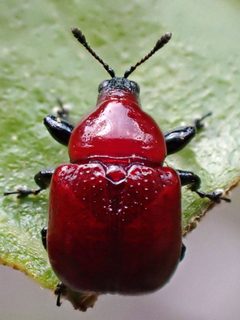
1- Homoeolabus analis(Leaf-rolling weevil)
Homoeolabus is a of leaf-rolling weevils in the Attelabidae, established by Jekel in 1860. The genus contains at least two described : Homoeolabus analis and Homoeolabus similis. Members of this genus are known for their distinctive nidification involving the rolling of leaves to create protective structures for their and larvae.
Pronunciation
How to pronounce Homoeolabus: /hɒ.mɪˈɒ.lə.bəs/
These audio files are automatically generated. While they are not always 100% accurate, they are a good starting point.
Identification
As a , Homoeolabus can be distinguished from other attelabid genera by features of the rostrum, , and body proportions typical of the Attelabinae . -level identification requires examination of specific morphological characters; H. analis and H. similis differ in details of elytral and body form.
Images
Distribution
The has been documented in North America, with H. analis specifically recorded from Florida. The full geographic range of the genus extends beyond Florida, though precise boundaries for both require further documentation.
Life Cycle
Females of at least H. analis exhibit nidification involving the rolling of leaves to form protective chambers for and developing larvae. This leaf-rolling behavior is a defining characteristic of the and .
Behavior
The is characterized by leaf-rolling nidification , in which females manipulate plant leaves to create enclosed structures. H. analis has been observed to have minimal impact on its host plants despite this feeding and nesting activity.
Human Relevance
Members of this , specifically H. analis, have minimal economic impact on their plants and are not considered significant agricultural pests. The serves as a host for kleptoparasitic weevils in the genus Pterocolus.
Similar Taxa
- Other Attelabidae generaMany attelabid weevils share leaf-rolling ; Homoeolabus is distinguished by specific morphological features and geographic distribution patterns.
- PterocolusThis of thief weevils ( Rhynchitidae) is frequently associated with Homoeolabus through kleptoparasitic relationships, but differs in family-level classification and behavioral .
More Details
Taxonomic Note
The was established by Henri Jekel in 1860. The two recognized , H. analis (described by Illiger in 1794) and H. similis (described by Kirby in 1837), were transferred to this genus from other attelabid genera based on Jekel's revisionary work.
Research Gaps
Detailed biological information for H. similis is notably absent from available literature. Most documented natural history information derives from studies of H. analis in Florida, and may not represent -wide characteristics.