
Choraginae
fungus weevils
Tribe Guides
3Choraginae is a of fungus weevils within the Anthribidae. The subfamily comprises approximately 9 , with authoritative sources differing on count—estimates range from at least 20 to more than 180 described species. The subfamily includes economically significant genera such as Araecerus, which contains stored product pests. Choraginae is distinguished from other anthribid subfamilies by morphological and biological characteristics associated with their fungal associations.
Pronunciation
How to pronounce Choraginae: /kɔˈrædʒɪniː/
These audio files are automatically generated. While they are not always 100% accurate, they are a good starting point.
Identification
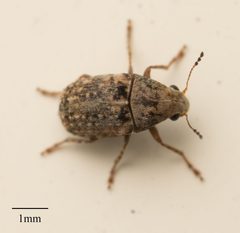
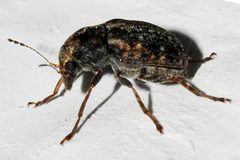
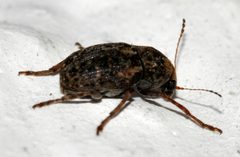
Choraginae can be distinguished from other Anthribidae by the combination of: antennal insertions visible from above; presence of a distinct antennal scrobe; and tibiae lacking uncinate (hooked) apices. Members generally exhibit the compact, somewhat cylindrical body form typical of fungus weevils, with a pronotum that is often narrower than the elytral base. The subfamily lacks the straight tibial apices found in some other anthribid groups.
Images
Habitat
are strongly associated with fungal substrates, including decaying wood, bracket fungi, and fungal fruiting bodies. Many inhabit forested environments where fungal resources are abundant. Some , particularly Araecerus, have expanded into anthropogenic habitats including stored products and agricultural commodities.
Distribution
The has a distribution with representation across multiple continents. Individual show varying patterns: Choragus is primarily Palearctic and Oriental; Araecerus is pantropical and subtropical with introductions worldwide; Euxenus and Euxenulus occur in the Nearctic region; and the Valentine genera (Euxenulus, Habroxenus, Neoxenus, Sicanthus) are predominantly Nearctic.
Diet
Larvae and feed on fungi, including fungal , spores, and fruiting bodies. Some in the Araecerus have been documented feeding on stored plant products including coffee beans, cocoa, and cassava, though fungal of these substrates may be the primary attractant.
Ecological Role
Choraginae functions as primary fungal consumers in forest , contributing to nutrient cycling through decomposition of fungal . Their specialized association with fungi represents a distinct trophic within the Anthribidae, differentiating them from plant-feeding relatives. Some serve as indicators of fungal resource availability in decaying wood .
Human Relevance
The Araecerus includes significant stored product pests, particularly Araecerus fasciculatus (coffee bean weevil), which infests coffee, cocoa, cassava, and other dried commodities. This has been distributed globally through trade and causes economic losses in tropical and subtropical storage facilities. Other Choraginae species have no documented economic impact.
Similar Taxa
- AnthribinaeDistinguished by antennal insertion concealed from above and often by presence of uncinate tibial apices; Anthribinae also tends toward broader, more flattened body forms
- UrodontinaeDistinguished by elongate body form, often with rostral elongation, and different antennal structure; Urodontinae also exhibits different fungal preferences
More Details
Taxonomic note
counts for Choraginae vary substantially between sources: iNaturalist cites 'at least 20 described species' while Wikipedia states 'more than 180 described species.' This discrepancy likely reflects differences in taxonomic interpretation, synonymy treatment, or database update timing. The was established by Kirby in 1819 with Choragus as type .
Research gaps
Most Choraginae described by Valentine (Euxenulus, 1960; Habroxenus, Neoxenus, Sicanthus, 1998) remain poorly documented in terms of and distribution. The Nearctic fauna is better studied than tropical representatives.