
Trigonorhinus
Wollaston, T.V., 1861
fungus weevils
Species Guides
8- Trigonorhinus alternatus(fungus weevil)
- Trigonorhinus griseus(fungus weevil)
- Trigonorhinus limbatus(Indian Blanket Fungus Weevil)
- Trigonorhinus riddelliae
- Trigonorhinus rotundatus(fungus weevil)
- Trigonorhinus sp-one-nm
- Trigonorhinus sticticus(Smut Fungus Weevil)
- Trigonorhinus tomentosus
Trigonorhinus is a of fungus weevils in the Anthribidae, comprising approximately 15-16 described . The genus includes wood-boring species that develop in plant tissues, with at least one species documented as a pest of Caragana liouana in arid regions of China. A notable species, Trigonorhinus sp., has been demonstrated to rely on gut bacterial for production of male essential for mate attraction.
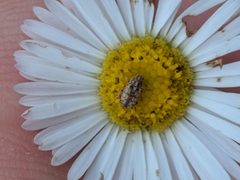
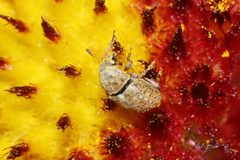
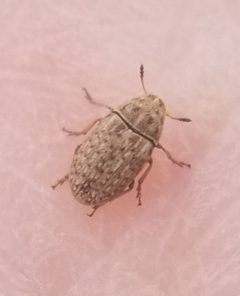
Pronunciation
How to pronounce Trigonorhinus: /ˌtraɪɡəˈnɔrɪnəs/
These audio files are automatically generated. While they are not always 100% accurate, they are a good starting point.
Images
Habitat
Arid regions; associated with woody vegetation. At least one bores into current-year shoots of woody plants, creating galls in plant .
Distribution
Documented from China (Ningxia, Inner Mongolia, Shanxi, Shaanxi provinces); specific collection records from Horinger County, Inner Mongolia. Broader distribution of requires further documentation.
Seasonality
Reproductive activity peaks May–August, synchronized with plant .
Diet
Wood-boring; larvae tunnel into plant and create galls on current-year shoots. Documented : Caragana liouana.
Host Associations
- Caragana liouana - larval plantlarvae tunnel into plant and create galls on current-year shoots; pest causing branch death by blocking water flow
Life Cycle
Females oviposit on current-year shoots. Larvae tunnel into plant and create galls. Developmental timing synchronized with .
Behavior
Males produce (2,6,10,14-tetramethylheptadecane and heptacosane) that attract females. Pheromone production is mediated by gut bacterial ; depletion reduces pheromone emission by >85% and eliminates female attraction. present in sixth abdominal sternite (elongate in females).
Ecological Role
At least one acts as a pest: galling blocks water flow causing branch death, with potential to harm dryland through plant mortality.
Human Relevance
Documented as an agricultural/forestry pest of Caragana liouana. The demonstrated dependence on gut bacteria for production suggests potential for -targeted pest management strategies.
Similar Taxa
- other Anthribidae generaTrigonorhinus can be distinguished by -level morphological characters established by Wollaston (1861); specific diagnostic features require examination
More Details
Microbial symbiosis
Trigonorhinus sp. exhibits a decisive dependence on gut bacteria for chemical communication. The single bacterial isolate Acinetobacter guillouiae is sufficient to restore production after depletion, indicating strain-specific control rather than general microbial effect.
Taxonomic uncertainty
-level identification remains ongoing for the well-studied Chinese ; the species has been identified as Trigonorhinus sp. by weevil Boris Korotyaev, with further identification to species level in progress.