
Phoenicobiella
Cockerell, T.D.A., 1906
Species Guides
2- Phoenicobiella chamaeropis(Tiki Weevil)
- Phoenicobiella schwarzii
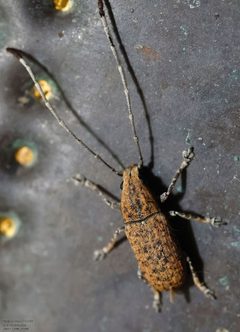
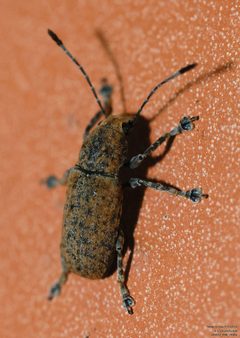
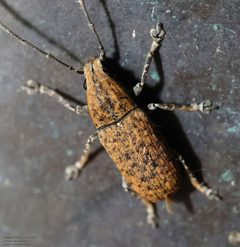
Phoenicobiella is a of fungus weevils in the Anthribidae, established by T.D.A. Cockerell in 1906. Members of this genus are small beetles associated with fungal substrates. The genus contains relatively few described and has been documented primarily from North America. As with other anthribids, and larvae are likely mycophagous.
Pronunciation
How to pronounce Phoenicobiella: //ˌfiːnɪkoʊˈbiːlə//
These audio files are automatically generated. While they are not always 100% accurate, they are a good starting point.
Identification
Phoenicobiella can be distinguished from other Anthribidae by the combination of: a relatively slender body form compared to the more robust Anthribus; that are not strongly clubbed; and characteristic pronotal shape. The genus is most similar to Eusphyrus but differs in details of the rostrum and antennal insertion. Species-level identification requires examination of male genitalia and subtle differences in elytral punctuation.
Images
Distribution
The has been documented from western North America, with records from the southwestern United States and Mexico. Specific state records include California, Arizona, and New Mexico.
Ecological Role
As members of the Anthribidae, in this likely function as decomposers in forest , contributing to nutrient cycling through consumption of fungal fruiting bodies and decaying wood.
Similar Taxa
More Details
Taxonomic history
The was established by Theodore Dru Alison Cockerell, a prolific British-American entomologist known for describing numerous across many insect groups. The type is Phoenicobiella chiriquensis Cockerell, 1906, described from Panama (though later records suggest North American distribution may have been underestimated).
Collection records
GBIF records indicate specimens have been collected from oak and pine forest , often in association with bracket fungi (Polyporaceae). The 83 iNaturalist observations suggest the is encountered with moderate frequency by naturalists in the southwestern United States.