
Anthribus
Geoffroy, 1762
fungus weevils
Species Guides
1- Anthribus nebulosus(fungus weevil)
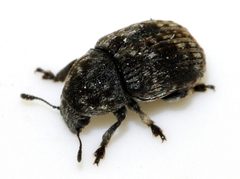
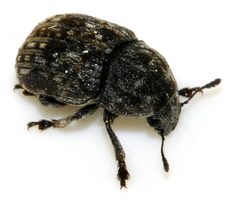
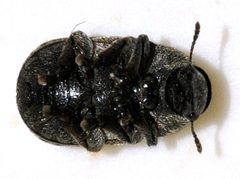
Anthribus is a of fungus weevils in the Anthribidae. occur in forest including coniferous, deciduous, and mixed forests. of Anthribus nebulosus have been observed to overwinter in bark crevices of coniferous trees with thicker bark. activity is seasonal and weather-sensitive, with observed activity from May to July in central European .
Pronunciation
How to pronounce Anthribus: //ˈæn.θrɪ.bəs//
These audio files are automatically generated. While they are not always 100% accurate, they are a good starting point.
Images
Habitat
Coniferous forests, deciduous forests, mixed forests, lowland forests, and forest-steppe . overwinter in bark of coniferous trees with thicker bark, hidden in cracks.
Distribution
Czech Republic (documented in Nízký Jeseník Hills), Denmark, Norway.
Seasonality
active in from early May to early July, with peak activity end of May to early June; activity interrupted by cold or rainy weather. At higher altitudes, flight activity may be restricted to first half of June.
Host Associations
- Picea - larval larvae occur mainly on this
- Pinus - larval and larvae occur mainly on this ; occur on this genus; adults overwinter in bark of Pinus sylvestris
- Abies - larval larvae occur mainly on this
- Larix - and site occur on this ; adults overwinter in bark of Larix decidua
- Quercus - occur on this
- Salix - occur on this
- Fagus - occur on this
Life Cycle
overwinter in bark crevices of coniferous trees. Larval development occurs on conifer including Picea, Pinus, and Abies.
Behavior
activity is seasonal and sensitive to weather conditions, with activity interrupted by cold or rainy periods. Equal sex ratio observed in flight activity suggests both sexes participate similarly in .
Ecological Role
Woodpeckers attack trees with masses of Anthribus nebulosus intensively, indicating the serves as a food source for these birds.