
Metaxyphloeus
Thomas, 1984
Species Guides
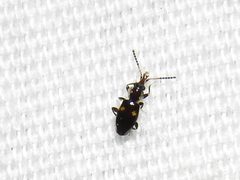
1- Metaxyphloeus texanus(Nose-jawed Flat Bark Beetle)
Metaxyphloeus is a of small rostrate beetles in the Laemophloeidae, to the New World. The genus comprises five described distributed from southern Texas to Bolivia. are characterized by their elongated (rostra), moderate size (~2 mm), and distinctive morphological features. Despite their distinctive appearance, the and stages remain poorly known. The function of the rostrum is currently unknown.
Pronunciation
How to pronounce Metaxyphloeus: //mɛˌtæksɪˈfləʊəs//
These audio files are automatically generated. While they are not always 100% accurate, they are a good starting point.
Identification
Distinguished from other laemophloeid by the combination of: prolonged rostrate ; six-antennomere antennal club; open procoxal cavities; acuminate intercoxal process on the first visible abdominal ventrite; and male genitalia lacking the piece of the tegmen. Most similar to the related rostrate genera Rhinomalus and Rhinophloeus, from which it differs by the specific configuration of these characters. The presence of one or two pairs of pale elytral maculae on a dark background aids field recognition in many specimens.
Images
Appearance
are moderate-sized laemophloeids approximately 2 mm in length. They possess prolonged (rostra), a defining feature of this . The procoxal cavities are open. The first visible abdominal ventrite bears an acuminate intercoxal process. The antennal club consists of six antennomeres. Coloration is typically dark brown to black, with or without . Many specimens display one or two pairs of pale elytral maculae. Male genitalia lack a dorsal piece of the tegmen.
Habitat
Forest , based on collection records. Specific microhabitat preferences are unknown.
Distribution
New World, ranging from southern Texas south to Bolivia. to the Americas.
Life Cycle
stages unknown. Developmental undescribed.
Behavior
are occasionally attracted to light. The function of the rostrum remains unknown.
Human Relevance
No known economic or medical significance. Occasionally encountered by entomologists through light trapping in forest .
Similar Taxa
- RhinomalusRelated rostrate laemophloeid ; shares prolonged but differs in specific structural characters of the procoxal cavities, antennal club, and male genitalia
- RhinophloeusRelated rostrate laemophloeid ; similar overall body plan but distinguished by differences in antennal club composition, processes, and genitalic structure
More Details
Rostrum function
The adaptive function of the elongated rostrum in Metaxyphloeus has not been determined, representing a significant gap in understanding of this .
Species diversity
Five are currently recognized: M. germaini, M. signatus, M. texanus, M. vicinus, and M. zeus.
Taxonomic history
described by Thomas in 1984, representing part of a small group of rostrate laemophloeid genera to the New World.