
Pharaxonotha
Reitter, 1875
Species Guides
2- Pharaxonotha floridana
- Pharaxonotha kirschii(Kirsch's Pleasing Fungus Beetle)
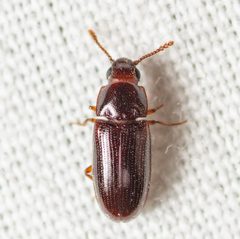
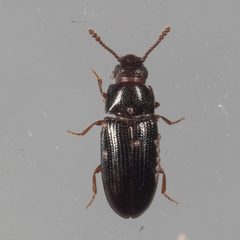
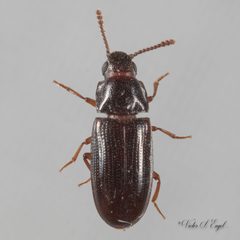
Pharaxonotha is a of pleasing fungus beetles in the Erotylidae, established by Reitter in 1875. Most are obligate of New World cycads, living and breeding within male pollen cones where they consume pollen and cone tissues, and serving as specialized by transferring pollen to female cones. The genus exhibits a remarkable coevolutionary relationship with cycads dating back approximately 200 million years to the early Jurassic. One species, P. kirschii, is an exception, inhabiting forest floor litter and stored foods rather than cycad cones. The beetles possess infrared receptors on their that enable them to detect thermogenic cones of their plants.
Pronunciation
How to pronounce Pharaxonotha: //ˌfæɹəksəˈnoʊθə//
These audio files are automatically generated. While they are not always 100% accurate, they are a good starting point.
Identification
-level identification relies partly on details of female genitalia. Differentiation from other erotylid is based on the combination of small size, three-segmented antennal clubs, and association with cycad cones (for most species). P. kirschii is distinguished from by its in leaf litter and stored products rather than cycad cones.
Images
Appearance
Small beetles measuring 1.59–5.09 mm in length and 0.60–1.89 mm in width. Most exhibit pale yellow-brown to medium brown coloration, though some display black to dark-brown or dark spotting patterns. The bears large, prominent . terminate in three-segmented clubs (enlarged segments).
Habitat
For most , the interior of male pollen strobili (cones) of cycads; larvae develop within cones and pupate in soil beneath plants. P. kirschii occurs in forest floor litter and as a pest in stored food products.
Distribution
United States (primarily Florida, Louisiana, Texas), Bahamas, Greater Antilles, Mexico, Central America, and South America to Bolivia. Distribution closely tracks that of cycad Ceratozamia, Dioon, Microcycas, and Zamia.
Seasonality
Activity synchronized with cycad coning events; timed to male cone dehiscence. Late season pupae may enter , remaining in soil until the following coning season.
Diet
and early-instar larvae feed on cycad pollen; later-instar larvae switch to consumption of cone tissues. P. kirschii feeds on detritus and stored food products.
Host Associations
- Zamia - obligate and -site Most Pharaxonotha ; beetles breed in male cones and transfer pollen to female cones
- Ceratozamia - obligate and -site Multiple including P. mexicana, P. perezi, P. tenuis
- Dioon - obligate and -site Multiple including P. bicolor, P. dimorpha, P. fawcettae, P. gigantea, P. novoai, P. occidentalis, P. sclerotiza, P. vovidesi, P. woodruffi
- Microcycas - obligate and -site P. esperanzae associated with M. calocoma in Cuba
Life Cycle
laid in male cycad cones; larvae hatch quickly and feed on pollen initially, then transition to cone tissues. Final-instar larvae exit cones through holes chewed in outer cone layer, drop to ground, and burrow into soil to pupate. emerge from pupae in 4–7 days, then seek fresh male cones or burrow into soil (possibly for hardening). Late-season pupae may undergo until next coning season.
Behavior
detect thermogenic cycad cones using infrared receptors on their . They move to heated male cones, enter through cone openings, feed on pollen, and emerge pollen-covered. They then relocate to heated female cones, enter, and deposit pollen, effecting pollination. This thermosensory is highly specific and synchronized with the heating patterns of Zamia cones, where male cones heat early evening and female cones heat approximately three hours later.
Ecological Role
Obligate of New World cycads; the relationship represents one of the oldest known insect-plant pollination mutualisms, with dating to the early Jurassic. The beetles depend entirely on cycad cones for , while cycads depend on the beetles for .
Human Relevance
P. kirschii is a minor pest of stored food products. Other have no direct economic impact but are of scientific interest due to their ancient pollination mutualism and infrared-sensing capabilities.
Similar Taxa
- Other ErotylidaePharaxonotha distinguished by three-segmented antennal clubs, small size, and obligate cycad association (most ); other pleasing fungus beetles typically associated with fungal fruiting bodies rather than cycad cones
More Details
Infrared detection
Pharaxonotha beetles possess specialized infrared receptors on their that enable detection of thermogenic cycad cones. This represents a rare example of infrared-guided foraging in insects and is critical to their pollination . Recent research (Valencia-Montoya et al., 2025) confirmed this as an ancient pollination signal.
Coevolutionary history
The association between Pharaxonotha and cycads has persisted for approximately 200 million years, since the early Jurassic, making it one of the most ancient and stable insect-plant mutualisms known. This long coevolutionary history has resulted in extreme specificity, with most Pharaxonotha pollinating only a few closely related cycad species.