
Murmidius
Leach, 1821
Species Guides
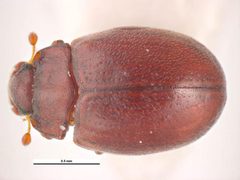
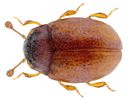
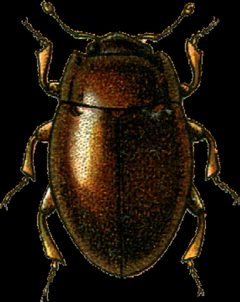
1- Murmidius ovalis(minute beetle)
Murmidius is a of small beetles in the Murmidiidae (formerly placed in Cerylonidae). The genus contains at least 20 described distributed across multiple continents. Species are generally associated with decaying organic matter and fungal growth. The genus was established by Leach in 1821.
Pronunciation
How to pronounce Murmidius: //mɜːˈmɪdiʊs//
These audio files are automatically generated. While they are not always 100% accurate, they are a good starting point.
Images
Habitat
in this have been observed in association with stored products, decaying organic matter, and moldy substrates. At least one species (M. ovalis) is documented from environments with fungal growth on organic debris.
Distribution
Documented from Europe (including Sweden and Norway), Asia (Japan, Okinawa, Sri Lanka), Australia, Hawaii, Panama, and South America (Venezuela, Colombia, Argentina). Distribution records indicate a wide but patchy global presence.
Diet
Mycophagous. At least one (M. ovalis) feeds on fungal mycelia and spores in moldy organic substrates. The feeding habits of other species in the have not been documented.
Behavior
Strong association with fungal growth in decaying matter. Both and larvae of at least one (M. ovalis) occur together in moldy substrates.
Ecological Role
Decomposer in stored product and organic decay systems; contributes to processing of fungal material in environments associated with human activity and natural decay.
Human Relevance
At least one (M. ovalis) has been documented as a pest or associate of stored products, occurring in moldy organic materials.
Similar Taxa
- Cerylonidae (former family placement)Murmidius was historically classified in Cerylonidae and shares small body size and association with decaying matter, but is now placed in the distinct Murmidiidae based on morphological differences.
More Details
Taxonomic history
Murmidius was long classified in the Cerylonidae. Recent phylogenetic studies have placed it in the separate family Murmidiidae within the superfamily Coccinelloidea. Some sources, including NCBI , may still list Cerylonidae.
Species diversity
The experienced significant taxonomic expansion in 2022, with Jałoszyński & Ślipiński describing 13 new from the Americas, Asia, and Australia. This suggests previously unrecognized diversity and likely incomplete sampling in many regions.