
Enicmus cordatus
Belon, 1895
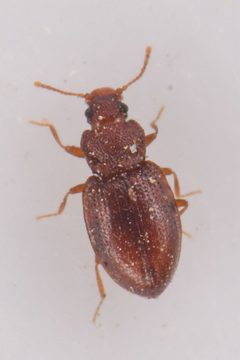
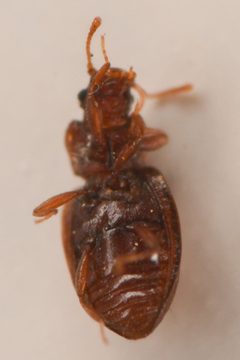
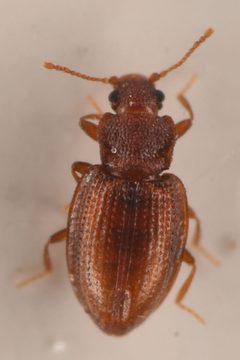
Enicmus cordatus is a of minute brown scavenger beetle in the Latridiidae, first described by Belon in 1895. This small belongs to a family commonly associated with decaying plant matter and fungi. Records indicate its presence in British Columbia, Canada. The species is rarely encountered, with limited observational data available.
Pronunciation
How to pronounce Enicmus cordatus: /ˈɛnɪkməs kɔrˈdeɪtəs/
These audio files are automatically generated. While they are not always 100% accurate, they are a good starting point.
Identification
Distinguished from other Latridiidae by the combination of antennal club structure and elytral punctation patterns. The specific epithet "cordatus" may refer to a -shaped or cordate feature, possibly of the pronotum or a specific . Confirmation requires examination of genitalia and detailed microsculpture under high magnification. Separation from other Enicmus depends on subtle differences in body proportions and surface texture.
Images
Appearance
Minute beetle, likely less than 2 mm in length based on characteristics. Members of Enicmus generally have an elongate-oval body form with distinct pronotal and elytral sculpturing. are clubbed, with the terminal segments enlarged. Coloration is typically brown to dark brown.
Habitat
Associated with moist, decaying organic matter. Latridiidae are typically found in leaf litter, rotting wood, fungal fruiting bodies, and other substrates rich in fungal .
Distribution
Recorded from British Columbia, Canada. The full extent of its range is poorly documented due to its minute size and cryptic habits.
Diet
Feeds on fungal and spores.
Behavior
Cryptic habits in decaying vegetation. Slow-moving, easily overlooked due to minute size.
Ecological Role
Contributes to decomposition processes by consuming fungal material in decaying plant matter.
Human Relevance
No documented economic or medical significance. Occasionally encountered in leaf litter by researchers.
Similar Taxa
- Other Enicmus speciesShare minute size, antennal club structure, and preferences; require microscopic examination for definitive separation.
- Other Latridiidae generaSimilar size and general appearance; distinguished by antennal segment count, club shape, and body proportions.
More Details
Taxonomic note
The was described by Belon in 1895. The Enicmus contains multiple species with limited modern taxonomic revision. The specific epithet "cordatus" is Latin for "-shaped," likely referring to a morphological feature visible in the original description.
Data limitations
Only 4 observations recorded in iNaturalist as of source date, indicating this is a rarely encountered or underreported .