
Sericoderus lateralis
(Gyllenhal, 1827)
minute hooded beetle
Sericoderus lateralis is a of minute hooded in the Corylophidae, first described by Gyllenhal in 1827. It is one of the smallest beetles, with typically measuring under 2 mm in length. The species has a remarkably broad geographic distribution spanning multiple continents including Africa, Australia, Europe, Northern Asia (excluding China), North America, and Southern Asia. Its wide range suggests either exceptional capabilities or cryptic requiring further investigation.
Pronunciation
How to pronounce Sericoderus lateralis: /ˌsɛrɪˈkɒdərəs ˌlætəˈreɪlɪs/
These audio files are automatically generated. While they are not always 100% accurate, they are a good starting point.
Identification
Identification to level requires microscopic examination of genitalic and other subtle morphological characters. The Sericoderus can be distinguished from other Corylophidae by the structure of the and pronotal shape. S. lateralis specifically may be recognized by details of the male genitalia and subtle differences in elytral punctuation, though these characters require knowledge. The extremely small size and hooded pronotum distinguish Corylophidae from other .
Images
Appearance
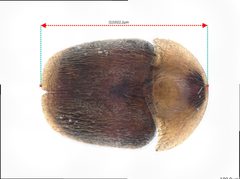
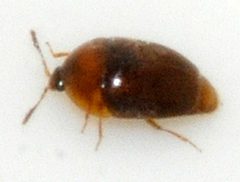
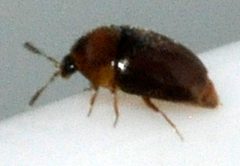
are minute, typically less than 2 mm in length. Like other Corylophidae, they have a compact, rounded body with a distinctly hooded pronotum that extends forward over the , giving a characteristic 'helmet-like' appearance. The are short relative to body width. Coloration and specific morphological details require specimen examination.
Habitat
Specific associations are poorly documented. Based on -level characteristics, members of Corylophidae are typically found in decaying organic matter, fungal fruiting bodies, and other moist microhabitats rich in fungi. The broad geographic distribution suggests ecological flexibility or association with widespread microhabitat types.
Distribution
Documented from Africa, Australia, Europe and Northern Asia (excluding China), North America, and Southern Asia. Distribution records include the Azorean islands of Corvo, Faial, Flores, Graciosa, and Pico. The pattern may reflect human-mediated transport, natural , or cryptic not yet distinguished morphologically.
Ecological Role
Likely contributes to nutrient cycling through feeding on fungal spores and in decaying organic matter, though this has not been specifically documented for this .
Human Relevance
No documented direct interactions with humans. The minute size and cryptic habits render it economically insignificant. Potential use as an for microhabitat quality in conservation assessments, though not currently employed as such.
Similar Taxa
- Other Sericoderus speciesMorphologically similar; require genitalic examination for reliable separation. Several in the share the compact, hooded body form.
- Other Corylophidae generaShare minute size and hooded pronotum; distinguished by antennal structure and pronotal details visible under magnification.
More Details
Taxonomic history
Originally described by Gyllenhal in 1827. The broad distribution has led to speculation about potential cryptic , but no comprehensive molecular phylogenetic study has been published to test this hypothesis.
Research needs
The , , and genetics of this remain essentially unstudied. Given its wide distribution, molecular analysis would help clarify whether this represents a single widespread species or a complex of cryptic species.