
Gloeosoma
Species Guides
3Gloeosoma is a of crust fungi in the Stereaceae (order Russulales). in this genus form thin, effused fruiting bodies that adhere tightly to their substrate, often appearing as smooth to slightly wrinkled crusts without a distinct cap or stipe. The genus is characterized by its smooth, hyaline spores and a hymenium that lacks cystidia. Gloeosoma species are saprotrophic, decomposing dead wood in forest .
Pronunciation
How to pronounce Gloeosoma: //ˌɡleɪoʊˈsoʊmə//
These audio files are automatically generated. While they are not always 100% accurate, they are a good starting point.
Identification
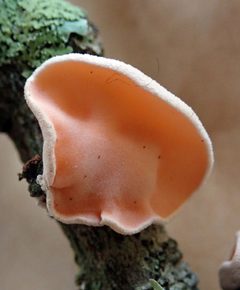
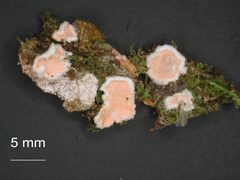
Distinguished from other crust fungi in Stereaceae by the combination of smooth, hyaline spores and the absence of cystidia in the hymenium. Fruiting bodies are resupinate (crust-like, flat against substrate), smooth to merulioid (wrinkled), and lack the poroid surface of poroid or the toothed hymenium of hydnoid fungi. Differs from Stereum by spore characteristics and hymenial structure.
Images
Ecological Role
Saprotrophic decomposer of dead wood, contributing to nutrient cycling in forest .
Similar Taxa
- StereumAlso in Stereaceae with resupinate to effused-reflexed fruiting bodies; distinguished by spore ornamentation and presence of cystidia in most .
- AmylostereumSimilar crust-like but produces amyloid spores and has distinct ecological associations with conifers and siricid woodwasps.