
Cephaloscymnus
Crotch, 1873
Species Guides
3- Cephaloscymnus insulatus
- Cephaloscymnus occidentalis
- Cephaloscymnus zimmermanni(Zimmermann's lady beetle)
Cephaloscymnus is a of small lady beetles ( Coccinellidae) established by Crotch in 1873. The genus comprises at least 11 described distributed primarily in the Americas, from the southwestern United States through Mexico and into South America. Cephaloscymnus is the type genus of the tribe Cephaloscymnini, a group of minute coccinellids with distinctive morphological features.

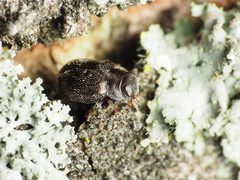
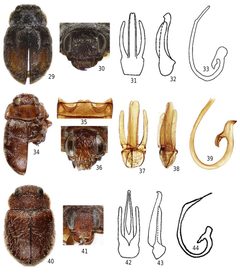
Pronunciation
How to pronounce Cephaloscymnus: //ˌsɛf.ə.loʊˈsaɪm.nəs//
These audio files are automatically generated. While they are not always 100% accurate, they are a good starting point.
Identification
Members of Cephaloscymnus can be distinguished from other Coccinellidae by their minute size and the diagnostic features of the tribe Cephaloscymnini, including a compact body form and specialized mouthpart structures. The is separated from related genera primarily through examination of male genitalia and detailed antennal . -level identification requires taxonomic knowledge and reference to original species descriptions.
Images
Distribution
The occurs in the Americas, with records from the southwestern United States (Arizona, California), Mexico, and South America (Argentina, Chile). such as C. occidentalis and C. zimmermanni are documented from the western United States, while C. porteri occurs in South America.
Similar Taxa
- Other Coccinellidae generaCephaloscymnus belongs to the tribe Cephaloscymnini, which contains minute lady beetles that may be confused with other small coccinellid . The tribe is distinguished by unique morphological characters, but external resemblance to unrelated small beetles in Scymnini or other groups is possible without detailed examination.
More Details
Taxonomic history
The was established by George Robert Crotch in 1873 with Cephaloscymnus zimmermanni as the type . The tribe Cephaloscymnini was erected to accommodate this and related genera of minute coccinellids with distinctive derived features.
Species diversity
Eleven are currently recognized, with several described relatively recently by Gordon (1970, 1974) and Gordon & Hanley (2017), indicating ongoing taxonomic work and likely incomplete sampling of the 's actual diversity.