
Stethorus punctum
(LeConte, 1852)
Spider Mite Destroyer, Black Mite Destroyer
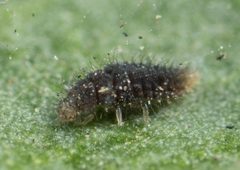
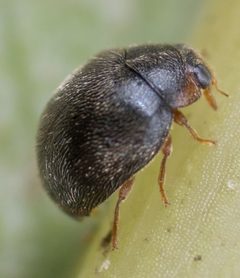
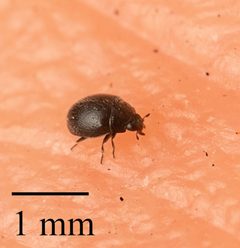
is a minute lady beetle specialized as a of spider mites. measure 1.35–1.55 mm and are predominantly black with yellow appendages. The is recognized for its role in of agricultural and horticultural pests, particularly the two-spotted spider mite and European red mite. Two are recognized, distinguished partly by leg coloration and geographic distribution.
Pronunciation
How to pronounce Stethorus punctum: /stɛˈθɔrəs ˈpʌŋktəm/
These audio files are automatically generated. While they are not always 100% accurate, they are a good starting point.
Identification
Distinguished from other Coccinellidae by its exceptionally small size (under 2 mm) and uniformly black body with contrasting yellow appendages. Separated from S. p. picipes by leg coloration: yellow legs in S. p. punctum versus black or dark brown legs in S. p. picipes. Distinguished from other Stethorus by geographic range and subtle morphological features requiring examination.
Images
Habitat
Associated with vegetation supporting spider mite , including agricultural crops, orchards, and ornamental plants. Found in both outdoor and greenhouse environments where mites occur.
Distribution
North America. S. p. punctum: southeastern Canada to North Carolina, west to Montana and Colorado. Subspecies S. p. picipes: Idaho to British Columbia, south to southern California.
Diet
Strictly predatory on plant-feeding mites, particularly spider mites (Tetranychus spp., Panonychus ulmi). Consumes , nymphs, and of mites.
Host Associations
Life Cycle
Complete with , larval, pupal, and stages. Specific developmental details and times not documented in available sources.
Behavior
Active of spider mites; has been observed consuming mite preferentially. and larvae both predatory.
Ecological Role
Specialized contributing to natural suppression of spider mite in agricultural and natural . Serves as a agent against pest mites.
Human Relevance
Valued as a agent for spider mite management in orchards, greenhouses, and field crops. Reduces reliance on chemical acaricides.
Similar Taxa
- Other Stethorus speciesSimilar minute size and black coloration; require examination of genitalia and other subtle features for definitive identification
- Other small CoccinellidaeDistinguished by combination of size under 2 mm, black body, and mite-specific predatory
More Details
Subspecies
Two recognized: punctum (LeConte, 1852) with yellow legs, and S. p. picipes Casey, 1899 with black or dark brown legs. Subspecies show partially distributions.