Necrobia ruficollis
(Fabricius, 1775)
ham beetle, red-shouldered ham beetle, red-necked bacon beetle
Necrobia ruficollis is a small, metallic in the Cleridae with distribution. It is primarily associated with decomposing animal matter, including dried and smoked meats, animal skins, and cheese. The is forensically significant, appearing on cadavers during advanced decay and skeletonization stages, and serves as an important indicator for postmortem interval estimation in cases involving longer time frames.
Pronunciation
How to pronounce Necrobia ruficollis: /nɛˈkroʊbiə ˌruːfɪˈkɒlɪs/
These audio files are automatically generated. While they are not always 100% accurate, they are a good starting point.
Identification
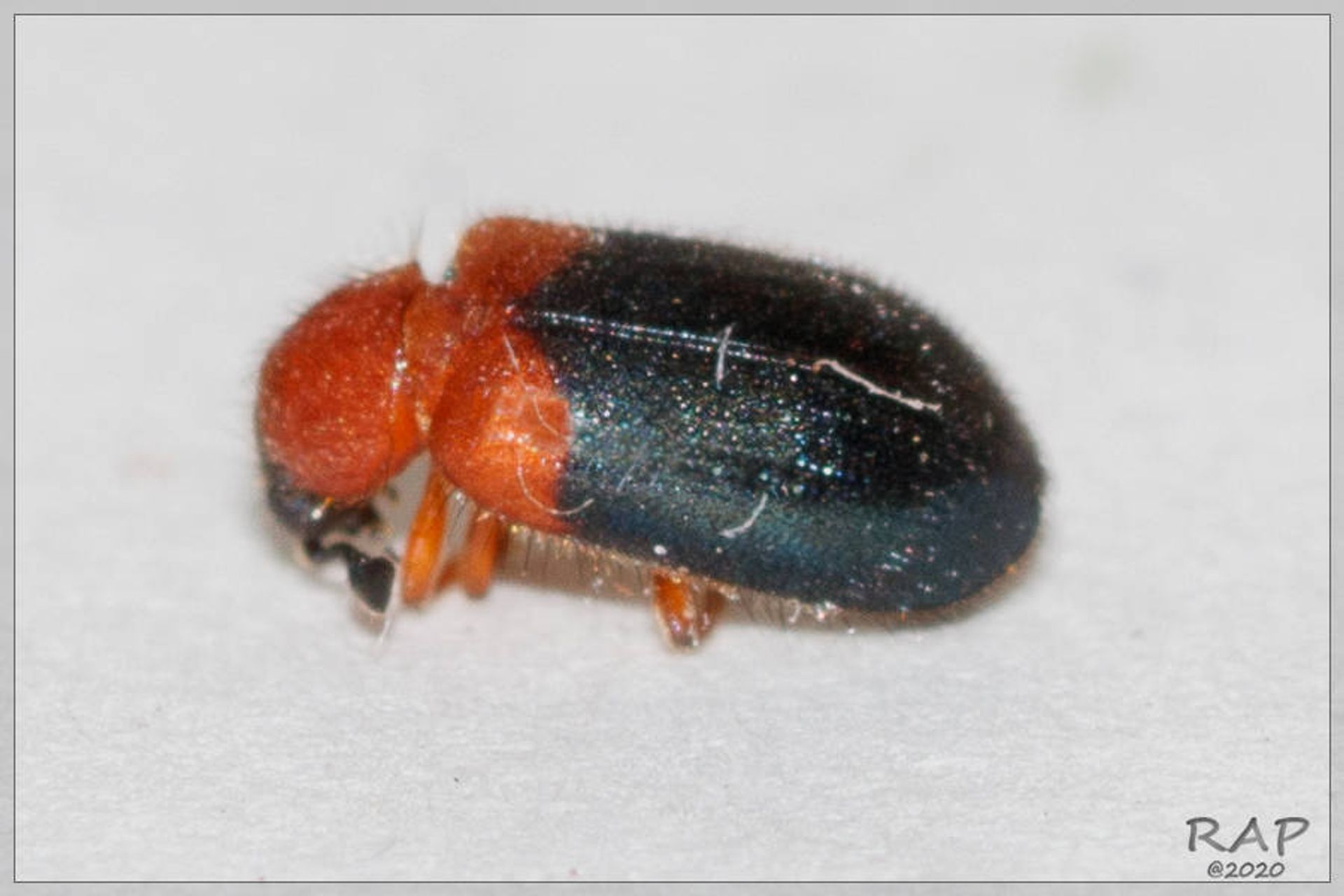
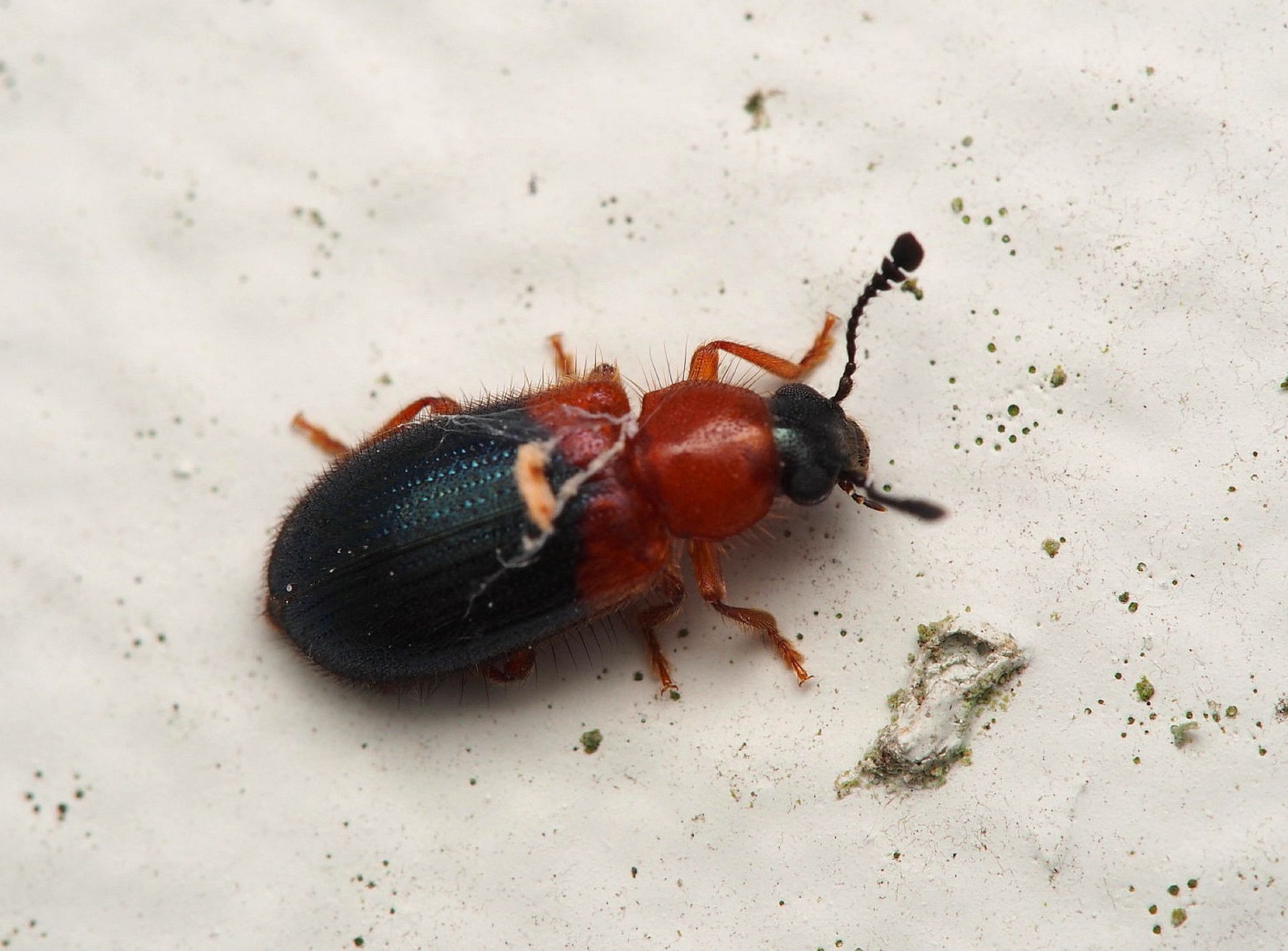
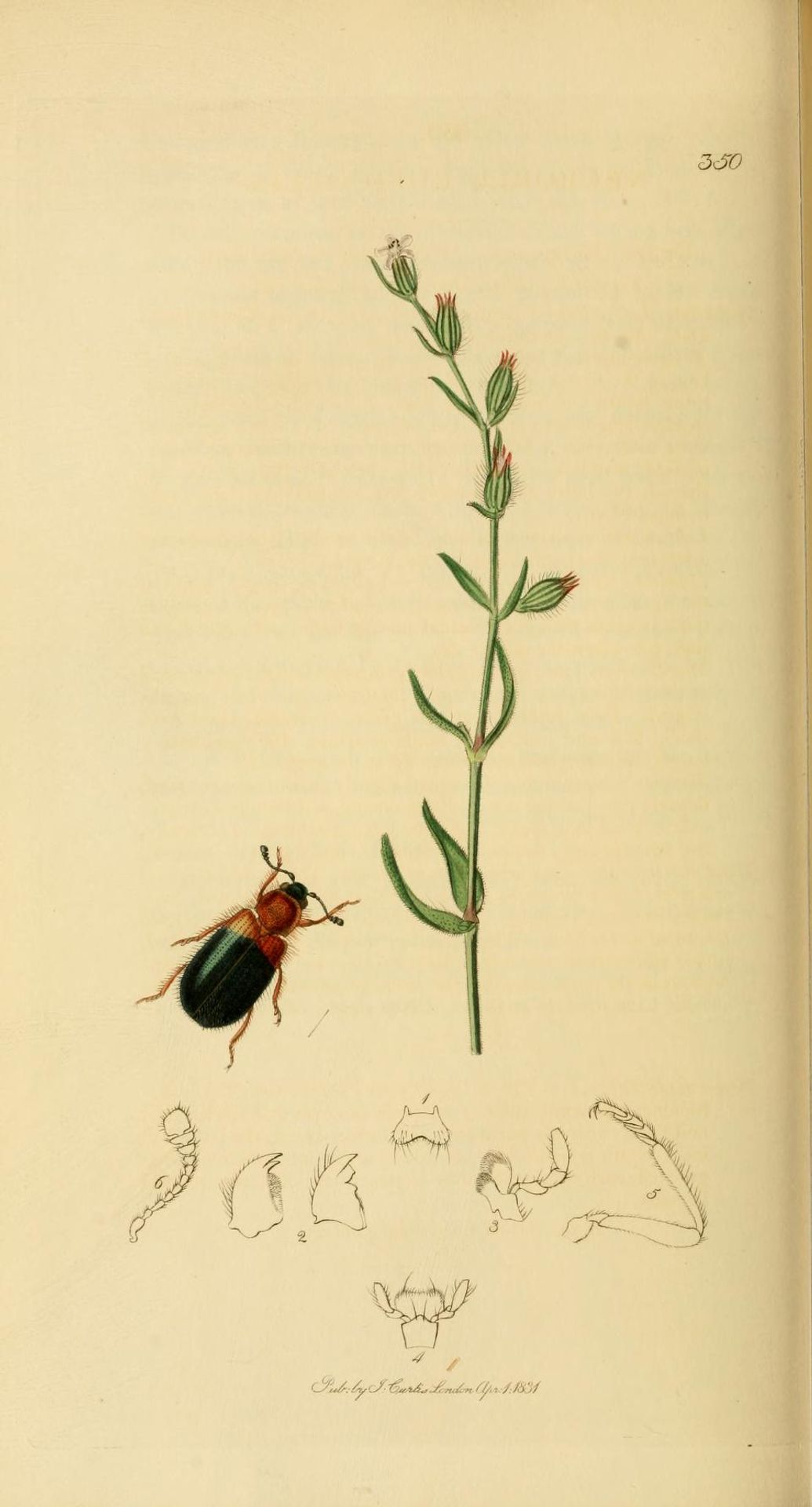
measure 4.0–6.5 mm in length. Body is predominantly metallic black or dark blue with reddish-brown , legs, and bases of the . The red-shouldered appearance distinguishes it from : Necrobia rufipes has red legs but dark thorax, while Necrobia violacea is entirely metallic blue-green without reddish markings.
Images
Habitat
Found in association with decomposing animal matter including dried and smoked meats, animal skins, cheese, and highly decomposed or skeletonized corpses. In storage contexts, occurs in dried meat, animal medicinal materials, fur, dried fish, fish meal, cocoons, and cotton clothes. In forensic settings, appears during advanced decay and skeletonization stages of carcasses, occasionally during bloating at higher temperatures.
Distribution
; globally distributed.
Diet
feed on corpse tissues and dried animal products; also prey on other insects found on corpses. Larvae feed on decomposed corpse tissue and dried animal matter.
Life Cycle
Complete with four stages: , larva, pupa, and . Larvae pass through three instars evidenced by observations and measurable changes in capsule width and distance between urogomphi. Post-feeding larvae construct pupal chambers in cotton substrate before . Developmental duration from egg to adult ranges from 47–93 days depending on temperature (93 days at 22°C, 47 days at 31°C). Developmental threshold temperature is 14.51°C with accumulated temperature constant of 684.12 degree days.
Behavior
are active on other insects inhabiting corpses. Larvae exhibit body extension and contraction during crawling. Post-feeding larvae demonstrate substrate preference for cotton when forming pupal chambers. Frequently co-occurs with Necrobia rufipes on carcasses.
Ecological Role
Forensically important sarcosaprophagous serving as for postmortem interval estimation, particularly valuable for longer PMI and highly decomposed or skeletonized remains where blow fly evidence is no longer applicable. Significant pest of stored dried animal products.
Human Relevance
Used in to estimate time since death in advanced decomposition cases. Pest of stored food products including dried meats, fish, cheese, and animal-derived materials; can damage museum specimens and taxidermy. Historical note: specimen identification by Pierre André Latreille in 1793 led to his release from imprisonment during the French Revolution.
Similar Taxa
- Necrobia rufipesRed legs but dark , lacking the red-shouldered appearance of N. ruficollis; both frequently co-occur on carcasses
- Necrobia violaceaEntirely metallic blue-green without reddish thoracic or leg markings