
Hydnocerinae
Genus Guides
3- Isohydnocera
- Phyllobaenus(checkered beetles)
- Wolcottia
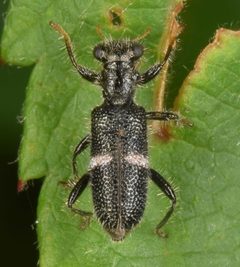
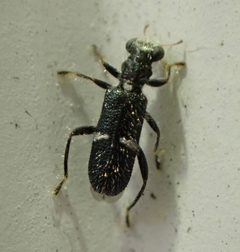
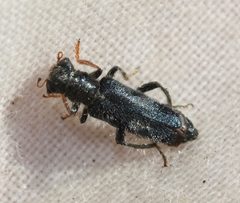
Hydnocerinae is a of checkered beetles ( Cleridae) comprising at least 70 described across three : Isohydnocera, Phyllobaenus, and Wolcottia. These beetles are part of the diverse Cleridae family, which are predominantly predatory. The subfamily has been documented through thousands of observations, indicating moderate ecological presence and research attention.
Pronunciation
How to pronounce Hydnocerinae: /haɪdnɔsɛˈriːniː/
These audio files are automatically generated. While they are not always 100% accurate, they are a good starting point.
Identification
Members of Hydnocerinae can be distinguished from other Cleridae by genitalic and structural characters, particularly features of the male and abdominal sternites. The three constituent differ in body form: Phyllobaenus tend to be more flattened and elongate, Isohydnocera and Wolcottia more compact. Species-level identification requires examination of microscopic characters and is not reliably accomplished from photographs alone.
Images
Distribution
of Hydnocerinae occur in the Nearctic and Neotropical regions, with the Phyllobaenus showing the broadest distribution across the Americas. Wolcottia and Isohydnocera have more restricted ranges, primarily in North America and the Caribbean.
Similar Taxa
- ClerinaeAnother of Cleridae; Hydnocerinae differs in genitalic structure and antennal club form, with Clerinae generally having more cylindrical bodies and different tarsal segmentation.
- EnopliinaeClerid with superficially similar body plans; Hydnocerinae lacks the distinctive pronotal and elytral modifications found in many Enopliinae.
More Details
Taxonomic history
The Hydnocerinae was established to accommodate with distinctive morphological features not fitting within the traditional Clerinae. Chapin described both Isohydnocera and Wolcottia in 1917, recognizing their distinctiveness from Phyllobaenus, which had been described much earlier by Dejean in 1837.
Research status
Despite the relatively high number of observations (over 3,000 on iNaturalist), formal taxonomic and ecological study of Hydnocerinae remains limited. Many descriptions date to the early 20th century, and modern phylogenetic relationships within the are poorly resolved.