
Enoclerus spinolae
(LeConte, 1853)
Handsome Yucca Beetle
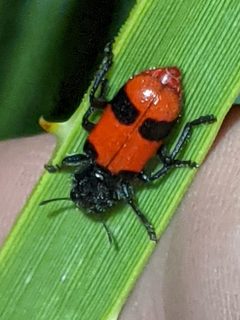
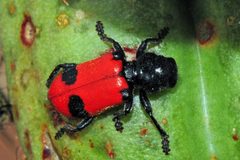
A checkered beetle in the Cleridae, Enoclerus spinolae is broadly distributed across the southwestern United States and northern Mexico. The was originally described by LeConte in 1853, later synonymized, and subsequently resurrected as a valid species. It is one of several Enoclerus species associated with yucca plants, where have been observed feeding on flowers.
Pronunciation
How to pronounce Enoclerus spinolae: /ɛˈnɒklərəs spɪˈnɒleɪ/
These audio files are automatically generated. While they are not always 100% accurate, they are a good starting point.
Identification
Distinguished from other southwestern Enoclerus by combination of geographic distribution and subtle morphological characters. found on yucca flowers may be confused with E. zonatus, which also occurs on yucca; precise identification requires examination of genitalic structures or other subtle morphological features. The two species show overlapping ranges but may be separated by details of color pattern and body proportions.
Images
Habitat
Arid and semi-arid regions of the southwestern United States; specifically associated with yucca-dominated including desert scrub, grasslands, and sand dune where yucca plants occur.
Distribution
Broadly distributed in the U.S. Southwest (including New Mexico, Arizona, and adjacent areas) and extending into northern Mexico. Documented from the Mescalero Sand Dunes of southeastern New Mexico and other sandy in the region.
Seasonality
active in late spring through summer, with peak activity following rainfall events that trigger insect . Observations from early June in New Mexico indicate activity during this period.
Diet
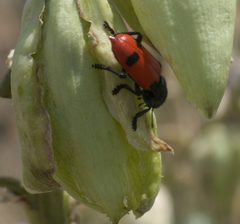
feed on yucca flowers; specific pollen or nectar feeding has been inferred from flower visitation .
Host Associations
- Yucca - feed on flowers; likely pollen or nectar consumer.Multiple observations document on yucca blooms in New Mexico sand dunes.
Behavior
are and actively visit yucca flowers during blooming periods. They are capable fliers and readily move among flowering plants within their .
Ecological Role
Likely functions as a or pollen consumer within yucca-dominated ; may contribute to nutrient transfer through flower visitation.
Human Relevance
Of interest to coleopterists and naturalists; the 'Handsome Yucca ' reflects its aesthetic appeal. No known economic importance or pest status.
Similar Taxa
- Enoclerus zonatusAlso occurs on yucca flowers in the southwestern U.S.; sympatric in some areas and requires careful morphological examination to distinguish.
- Enoclerus vernalisRecently described congeneric from the Mojave Desert; distribution but similar associations.
- Enoclerus valensRecently described congeneric from Arizona; potentially overlapping range requires careful identification.
Misconceptions
Previously treated as a synonym of another , leading to underreporting in the literature; its resurrection as a valid species means older records may require re-examination.
More Details
Taxonomic History
Originally described by LeConte in 1853, this was subsequently synonymized with other Enoclerus species. It was formally resurrected as a valid species in a 2009 Zootaxa publication that also described two related new species from the western United States.
Intraspecific Variation
Observations from New Mexico document variation in spot size on the among individuals collected from the same locality, suggesting morphological plasticity within the .