
Enoclerus quadrisignatus
(Say, 1835)
White-belted Enoclerus
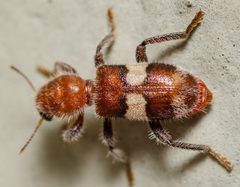
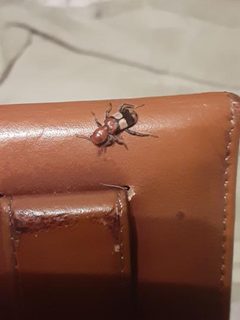
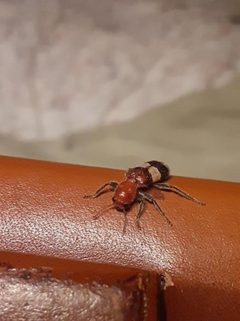
Enoclerus quadrisignatus is a of checkered beetle in the Cleridae. It occurs in Central America and North America. The "White-belted Enoclerus" refers to a distinctive pale band across the . Like other members of the , it is likely associated with dead wood where it preys on other insects.
Pronunciation
How to pronounce Enoclerus quadrisignatus: /ɛnəˈklɛrəs kwɒdrɪsɪɡˈneɪtəs/
These audio files are automatically generated. While they are not always 100% accurate, they are a good starting point.
Identification
The can be recognized by the specific epithet "quadrisignatus" (meaning "four-marked") and its "White-belted Enoclerus," which suggests a pale transverse band across the dark . This distinguishes it from such as Enoclerus ichneumoneus, which has an orange band rather than white. Specific diagnostic features beyond color pattern are not documented in available sources.
Images
Habitat
Distribution
Central America and North America. Distribution records from GBIF confirm presence in Middle America and North America.
Ecological Role
As a member of the Cleridae , likely serves as a of woodboring beetles, particularly bark beetles (Scolytinae). This ecological function is well-documented for the family and , though specific prey records for E. quadrisignatus are not available.
Similar Taxa
- Enoclerus ichneumoneusSimilar orange-banded color pattern, but E. quadrisignatus has a white band rather than orange and is distinguished by the specific epithet referring to four markings.
More Details
Taxonomic note
The was described by Thomas Say in 1835, making it one of the earlier described North American clerids.