
Glyptina cyanipennis
(Crotch, 1873)
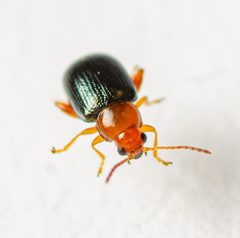
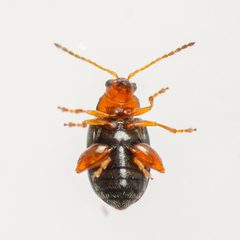
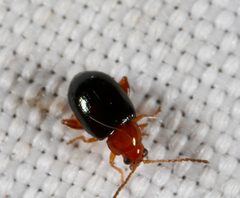
Glyptina cyanipennis is a of flea beetle in the Chrysomelidae, first described by Crotch in 1873. It is found in North America, with confirmed records from Ontario, Canada. As a member of the Alticinae, it possesses the enlarged hind characteristic of flea beetles, which enable jumping locomotion. The species epithet 'cyanipennis' refers to blue-colored wings.
Pronunciation
How to pronounce Glyptina cyanipennis: /ˈɡlɪptɪnə ˌsaɪ.ænɪˈpɛnɪs/
These audio files are automatically generated. While they are not always 100% accurate, they are a good starting point.
Identification
Identification to level requires examination of genitalia and other microscopic features. The blue coloration suggested by the species name may help distinguish it from , though Glyptina species are generally similar in overall form. Specimens should be compared with type material or authoritative keys for the .
Images
Appearance
As a flea beetle in the Alticinae, Glyptina cyanipennis possesses enlarged hind adapted for jumping. The epithet 'cyanipennis' (blue-winged) indicates blue coloration on the or wings. Specific morphological details beyond these general characteristics are not documented in available sources.
Distribution
Recorded from North America, with confirmed presence in Ontario, Canada. The full extent of its range within North America has not been precisely documented.
Similar Taxa
- Other Glyptina species share the general flea beetle and require careful examination of genitalia and coloration patterns for accurate identification.
- Other Alticinae generaFlea beetles across multiple share enlarged hind and similar body plans; definitive identification relies on subtle morphological characters.
More Details
Nomenclature
The specific epithet 'cyanipennis' is derived from Latin 'cyaneus' (blue) and 'penna' (wing), referring to the blue coloration of the wings or .