
Disonycha alternata
(Illiger, 1807)
Striped Willow Leaf Beetle
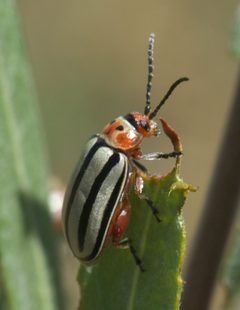
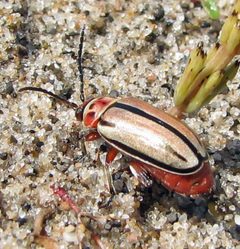
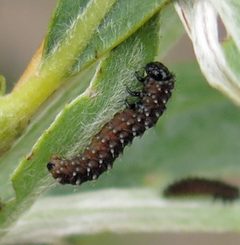
Disonycha alternata, commonly known as the striped willow , is a flea beetle in the Chrysomelidae. It is distributed across North America, with records from Canada and the United States. As a member of the Disonycha, it is associated with willow (Salix) plants.
Pronunciation
How to pronounce Disonycha alternata: //ˌdɪsəˈnɪkə ˌɔltərˈneɪtə//
These audio files are automatically generated. While they are not always 100% accurate, they are a good starting point.
Identification
The "striped willow " suggests longitudinal striping on the , though specific diagnostic features distinguishing it from such as Disonycha glabrata or Disonycha xanthomelas are not documented in available sources. Flea beetles in this are generally small, with enlarged hind adapted for jumping.
Images
Habitat
Associated with willow (Salix) vegetation, suggesting riparian or wetland-edge where plants occur.
Distribution
North America, with confirmed records from Canadian provinces including Alberta, British Columbia, and Manitoba, and presence in the United States.
Diet
Feeds on willow (Salix) leaves, based on and -level associations.
Host Associations
- Salix - plant indicates willow feeding; specific not documented
Ecological Role
Herbivore on willow foliage; likely contributes to nutrient cycling and serves as prey for .
Similar Taxa
- Disonycha glabrataCongeneric flea beetle with similar size and preferences; differentiation requires examination of elytral pattern and punctation
- Disonycha xanthomelasAnother willow-associated ; specific distinguishing characters not available in sources
More Details
Taxonomic note
The was described by Illiger in 1807. The Disonycha contains approximately 30 North American species, many associated with Salicaceae .