
Myochrous
Erichson, 1847
Genus Guides
5- Myochrous cyphus-denticollis
- Myochrous denticollis(Southern Corn Leaf Beetle)
- Myochrous intermedius
- Myochrous magnus
- Myochrous squamosus
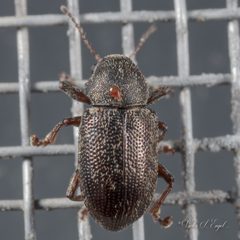
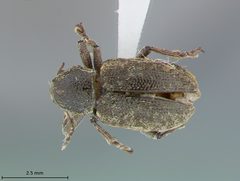
Myochrous is a of leaf beetles in the Eumolpinae, containing over 50 described distributed across North, Central, and South America. The generic name derives from Ancient Greek words meaning 'mouse' and 'color'. Several species are agricultural pests, including Myochrous denticollis (southern corn leaf beetle), Myochrous melancholicus (banana pest), and Myochrous armatus (emerging soybean pest in Brazil). The genus was formerly placed in tribe Adoxini but is now classified in Eumolpini.

Pronunciation
How to pronounce Myochrous: /maɪˈɒk.rəs/
These audio files are automatically generated. While they are not always 100% accurate, they are a good starting point.
Images
Habitat
Agricultural fields, including corn, soybean, and banana plantations; also present in broader terrestrial across the Americas. Weeds and volunteer plants of corn and cotton serve as for some .
Distribution
North America, Central America, and South America. Documented occurrences include the United States (Illinois), Brazil, and Colombia.
Seasonality
For Myochrous armatus in Brazil: present from late October through January, with peak abundance in November and December. This suggests a for at least this .
Diet
Foliage and plant tissues of cultivated crops. Myochrous denticollis feeds on corn; Myochrous melancholicus damages banana fruit; Myochrous armatus feeds on soybean stems, cotyledons, and petioles.
Host Associations
- Zea mays - food plantMyochrous denticollis
- Musa - food plantMyochrous melancholicus, fruit damage
- Glycine max - food plantMyochrous armatus
- Gossypium - for and Myochrous armatus, volunteer plants
- weeds - for and Myochrous armatus
Life Cycle
Myochrous armatus exhibits a with season-long presence during the growing period. are deposited on weeds and volunteer crop plants.
Behavior
Myochrous armatus are active at any time of day without distinct , , or patterns. The majority of individuals (40-70%) remain in the soil throughout the day and night. Adults feed by scraping or cutting plant tissues, with feeding preferences shifting from stems and cotyledons (up to 14 days after plant ) to petioles (after 21 days).
Ecological Role
Herbivore; several function as crop pests causing measurable yield reductions. Myochrous armatus can reduce soybean yield by 35% per insect per plant after 7 days at early growth stages.
Human Relevance
Agricultural pest of economic significance. Myochrous denticollis damages corn in Illinois. Myochrous melancholicus damages banana fruit. Myochrous armatus is an emerging pest in Brazilian soybean production with established (0.4-1.9 per row meter). Management requires approaches.
Similar Taxa
More Details
Taxonomic history
The was formerly classified in tribe Adoxini but has been reassigned to Eumolpini based on BugGuide and ITIS records.
Etymology
The name combines Ancient Greek μῦς (mys, 'mouse') and χρῶμα (chrōma, 'color'), presumably referring to coloration of some .
Economic thresholds
For Myochrous armatus on soybean, dynamic range from 0.4 to 1.9 per row meter depending on productivity expectations, control costs, and market value.