
Neofidia lurida
grape rootworm
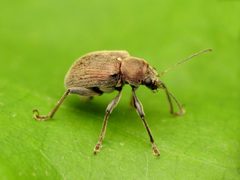
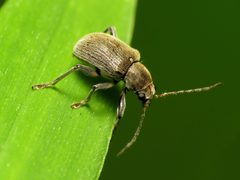
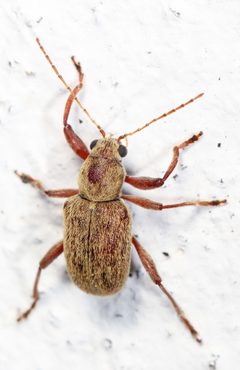
Neofidia lurida, commonly known as the grape rootworm, is a leaf beetle in Chrysomelidae. It is distributed across eastern North America, extending south to Mexico and north to Quebec. The is recognized as an economic pest of grape due to larval feeding damage on roots. are small, hairy beetles active in late spring and early summer.
Pronunciation
How to pronounce Neofidia lurida: /ˌniːoʊˈfɪdiə ˈlʊrɪdə/
These audio files are automatically generated. While they are not always 100% accurate, they are a good starting point.
Identification
measure 4.9–7.0 mm in length. Body is mahogany brown and densely covered with white to straw-yellow hairs. The combination of small size, uniform brown coloration with conspicuous pale , and association with Vitaceae distinguishes this from similar leaf beetles.
Images
Distribution
Eastern North America, ranging south to Mexico. Recently documented as far north as Quebec, representing a northward range extension.
Seasonality
emerge in late spring and early summer, feeding on leaves for 3–4 weeks. Larvae overwinter in soil and resume feeding on roots the following spring.
Diet
Larvae feed on roots of grape vines (Vitis), Virginia creeper (Parthenocissus quinquefolia), and other members of Vitaceae. feed on leaves.
Host Associations
- Vitis - larval (roots)grape vines
- Parthenocissus quinquefolia - larval (roots)Virginia creeper
- Vitaceae - larval (roots)-level association
Life Cycle
One per year. emerge late spring to early summer, feed on foliage, and oviposit. hatch in 1–2 weeks. Larvae develop through summer, then overwinter in soil. Spring feeding by larvae precedes and adult .
Behavior
feed on leaves for a limited period (3–4 weeks) before . Larvae are subterranean root-feeders.
Human Relevance
Significant economic pest of grape production. Larval root-feeding can damage or kill vines, reducing yields.
Sources and further reading
- BugGuide
- Wikipedia
- iNaturalist taxon
- The Marvelously Cryptic Dicerca lurida | Beetles In The Bush
- JIPM Article on Masked Chafer Grubs in Turfgrass Explains Management Techniques
- ID Challenge #19 | Beetles In The Bush
- Old, But Not That Old: Debunking the Myth of Ancient Cockroaches
- Bug Eric: City Nature Challenge 2023 Recap
- Pseudoscorpiones | Beetles In The Bush