
Coleorozena
Moldenke, 1970
Species Guides
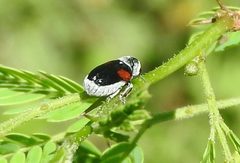
4Coleorozena is a of case-bearing leaf beetles in the Chrysomelidae, containing seven described . The genus was established by Moldenke in 1970, primarily to accommodate species originally described in the genus Coscinoptera. Taxonomic treatment of this group has varied, with some authorities suggesting reintegration into Coscinoptera, though recent revisions maintain Coleorozena as a separate genus.
Pronunciation
How to pronounce Coleorozena: //ˌkɒl.i.oʊˈroʊzeɪ.nə//
These audio files are automatically generated. While they are not always 100% accurate, they are a good starting point.
Identification
Distinguished from related by the combination of case-bearing larval habit and morphological characters that prompted its separation from Coscinoptera. Specific diagnostic features for the genus versus Coscinoptera require examination of detailed morphological characters; -level identification relies on examination of external including elytral patterns and body proportions.
Images
Distribution
of Coleorozena are recorded from North America, with distributions spanning the United States and adjacent regions. Specific range data varies by species: C. vittata and C. lecontii have broad distributions, while others such as C. alicula and C. subnigra appear more restricted.
Life Cycle
As case-bearing leaf beetles, larvae construct portable cases from fecal material and shed , a characteristic trait of the Cryptocephalinae. Larval development occurs within these cases, which are carried throughout the mobile larval stage.
Similar Taxa
- CoscinopteraColeorozena was historically treated as part of Coscinoptera, and were transferred between these ; separation based on subtle morphological differences that remain subject to taxonomic debate
More Details
Taxonomic history
The has undergone repeated taxonomic revision. were originally described in Coscinoptera (1848–1927), then transferred to Coleorozena upon its establishment in 1970. Subsequent authors have questioned this separation, but current treatments retain Coleorozena as valid.