
Saxinis
Lacordaire, 1848
case-bearing leaf beetles
Species Guides
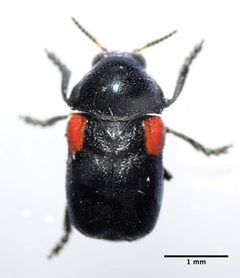
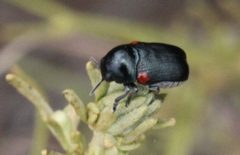
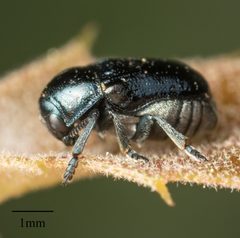
8Saxinis is a of case-bearing leaf beetles ( Chrysomelidae) established by Lacordaire in 1848. The genus comprises at least 10 described distributed primarily in North America. These beetles are characterized by their hardened forewings () that form a protective case over the . Members of this genus are part of the diverse leaf beetle fauna of the Americas.
Pronunciation
How to pronounce Saxinis: /ˈsaksɪnɪs/
These audio files are automatically generated. While they are not always 100% accurate, they are a good starting point.
Identification
Saxinis can be distinguished from other Chrysomelidae by features typical of case-bearing leaf beetles, including that completely cover the and meet along a straight midline. Specific diagnostic characters for the genus require examination of morphological details such as structure, tarsal formula, and genitalia. Species-level identification within Saxinis relies on subtle differences in coloration, punctation patterns, and body proportions.
Images
Distribution
North America, with documented from the southwestern United States (including California, Arizona, Texas) and Mexico. Specific distribution varies by species: S. deserticola and S. sierramadrensis are associated with arid regions, while others like S. hornii and S. knausii have broader ranges.
Similar Taxa
- Other Chrysomelidae generaSaxinis shares the general leaf beetle body plan with numerous other ; differentiation requires attention to specific morphological characters rather than overall gestalt.
More Details
Taxonomic history
The was established by Lacordaire in 1848 with Saxinis omogera as the type . The genus has been subject to taxonomic revisions, with species descriptions spanning from 1848 to 1970.
Species diversity
Ten are currently recognized: S. apicalis, S. deserticola, S. hornii, S. knausii, S. omogera, S. saucia, S. sierramadrensis, S. sinuata, S. sonorensis, and S. subpubescens. Several species were described by early American coleopterists including J.L. LeConte, Schaeffer, and Fall.