
Trachymela sloanei
(Blackburn, 1896)
Australian tortoise beetle, small eucalyptus tortoise beetle
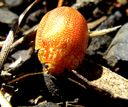
Trachymela sloanei is a leaf beetle in the Chrysomelidae, native to Australia where it feeds on Eucalyptus trees. The has established in multiple regions including California, Chile, Spain, Portugal, Greece, and China. It was first detected in Europe in 2014 and reported from Algeria in May 2025, representing the first African record. The is recognized as a defoliating pest of Eucalyptus species with potential economic and ecological impacts in invaded regions.

Pronunciation
How to pronounce Trachymela sloanei: /ˌtrækɪˈmɛlə ˈsloʊnaɪ/
These audio files are automatically generated. While they are not always 100% accurate, they are a good starting point.
Images
Habitat
Associated with Eucalyptus trees; occurs in both natural and ornamental settings. In invaded regions, has been observed in urban areas with ornamental Eucalyptus plantings and in Eucalyptus plantations.
Distribution
Native to Australia. established in: California (USA), Chile, Spain, Portugal, Greece, China (Shenzhen), and Algeria (first African record, May 2025). Distribution records also indicate presence in Hawaii and New Zealand.
Diet
Defoliator of Eucalyptus (Myrtaceae); specifically documented feeding on Eucalyptus camaldulensis. Causes characteristic foliar damage and feeding traces on foliage.
Host Associations
- Eucalyptus camaldulensis - ornamental and plantation tree
- Eucalyptus spp. - multiple utilized
Ecological Role
Herbivorous defoliator; in native range, functions as a natural component of Eucalyptus-associated insect . In invaded regions, poses risk to Eucalyptus plantations and urban greenery through defoliation pressure.
Human Relevance
Recognized as an pest in multiple countries. Economic concern for Eucalyptus plantation forestry and ornamental tree management. Detection in new regions triggers surveillance and management responses.
Similar Taxa
- Other Trachymela speciescongeneric may share Eucalyptus association and similar ; requires diagnostic morphological characters for reliable identification
- Other Chrysomelinae leaf beetles on Eucalyptusmultiple chrysomelid beetles feed on Eucalyptus; accurate identification depends on specific morphological features rather than association alone
More Details
Invasive history
First detected in Europe in 2014. Rapid expansion across Mediterranean region and other continents suggests high capacity and establishment potential.
Management relevance
Illustrated morphological features and chorological data have been published to support identification and future management efforts in Europe.
Sources and further reading
- BugGuide
- Wikipedia
- GBIF taxonomy match
- iNaturalist taxon
- NCBI Taxonomy
- First report of the invasive Australian tortoise beetle Trachymela sloanei (Blackburn, 1897) (Coleoptera: Chrysomelidae) in Algeria
- Updating new invasions: The Australian tortoise beetle Trachymela sloanei (Blackburn, 1897) (Coleoptera: Chrysomelidae) in the Iberian Peninsula