
Gonioctena
Chevrolat in Dejean, 1836
broad-shouldered leaf beetles
Species Guides
3- Gonioctena americana(American Aspen Beetle)
- Gonioctena nivosa
- Gonioctena notmani
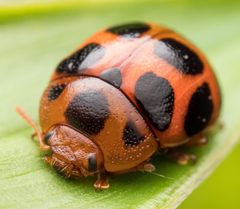
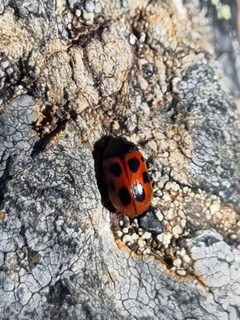
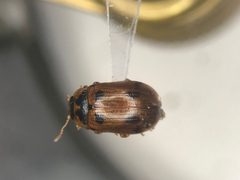
Gonioctena is a of leaf beetles (Chrysomelidae: Chrysomelinae) comprising more than 90 described distributed across Europe and Asia. Species are herbivorous, with documented associations to diverse plants including trees and shrubs in Rosaceae, Betulaceae, and Fabaceae. Some species have been observed adapting to plants, such as G. quinquepunctata shifting from native Sorbus aucuparia to invasive Prunus serotina. The genus includes species with notable reproductive strategies, including ovoviviparity recorded in G. (Brachyphytodecta) longshengensis.
Pronunciation
How to pronounce Gonioctena: //ˌɡoʊniˈɒktɪnə//
These audio files are automatically generated. While they are not always 100% accurate, they are a good starting point.
Images
Habitat
Forested and open where plants occur; specific associations include woodlands with Sorbus aucuparia, areas with Prunus serotina establishment, and regions supporting Fabaceae shrubs such as Genista umbellata.
Distribution
Europe and Asia; documented from Denmark, Norway, Sweden, Netherlands, Bulgaria, Spain, and eastward through China (Fujian, Guangxi, Sichuan), Vietnam, and Japan (Shikoku). North American records include Vermont, USA.
Diet
Herbivorous; feeds on leaves of plants. Documented host associations include Sorbus aucuparia (Rosaceae), Prunus serotina (Rosaceae), Alnus firma (Betulaceae), and Genista umbellata (Fabaceae).
Host Associations
- Sorbus aucuparia - primary native European
- Prunus serotina - North American ; shift documented in G. quinquepunctata
- Alnus firma - of G. iyonis in Japan
- Genista umbellata - of G. pseudogobanzi in Spain
Life Cycle
Complete with , larval, pupal, and stages. Larvae of subgenus Spartoxena possess diagnostic on abdominal segments, distinctive tarsal claw shape, and characteristic and epipharyngeal microtrichia arrangements. Ovoviviparity has been recorded in at least one (G. longshengensis), representing an unusual reproductive mode within the .
Behavior
of some show divergent preferences correlated with local host plant availability. G. quinquepunctata exhibits behavioral differentiation between populations derived from native versus host plants, with weak corresponding genetic differentiation. and larvae are folivorous, feeding on host plant leaves.
Ecological Role
Herbivore incorporating plants into local ; some facilitate integration of plants into native food webs through host shift . Prey for tachinid (documented for G. fornicata). Contributes to plant-insect interaction networks in forest and shrubland .
Human Relevance
G. fornicata (lucerne ) is considered an agricultural pest. Some may contribute to of plants through herbivory, though this potential remains underexplored. Serves as study system for evolutionary to novel and host-associated divergence.
Sources and further reading
- BugGuide
- Wikipedia
- GBIF taxonomy match
- iNaturalist taxon
- NCBI Taxonomy
- Catalogue of Life
- Exploring poorly researched insect fauna: how plants amplify the net ecological benefit for inconspicuous invertebrate communities - Buglife Blog - Buglife
- Table S7: ANOVA and GLM results for the Gonioctena quinquepunctata host preference tests
- Table S6: SNP Loci that showed indications of genetic differentiation between both host plants in the leaf beetle Gonioctena quinquepunctata
- Figure 5: Frequency distribution of per-locus pairwise ( Prunus – Sorbus ) ${F}_{\mathrm{ST}}$ values for Gonioctena quinquepunctata .
- A new species of the genus Gonioctena (Coleoptera: Chrysomelidae: Chrysomelinae) from Shikoku, Japan, with description of its immature stages
- Two new species of the Gonioctena mauroi species-group from China (Coleoptera: Chrysomelidae: Chrysomelinae)
- Two new species of the subgenus Brachyphytodecta Bechyně, 1948 (Coleoptera, Chrysomelidae, Gonioctena) from Sichuan, Southwest China
- Description of the mature larva of Gonioctena pseudogobanzi Kippenberg, 2001 (Coleoptera: Chrysomelidae: Chrysomelinae) and key to the larvae of the subgenus Spartoxena
- Tachinid (Diptera: Tachinidae) parasitoids of the lucerne beetle, Gonioctena fornicata (Brüggemann, 1873) (Coleoptera: Chrysomelidae), with a new parasitoid record and their parasitism rates