Physonota unipunctata
(Say, 1824)
horsemint tortoise beetle, beebalm tortoise beetle, bergamot tortoise beetle, one-spotted tortoise beetle
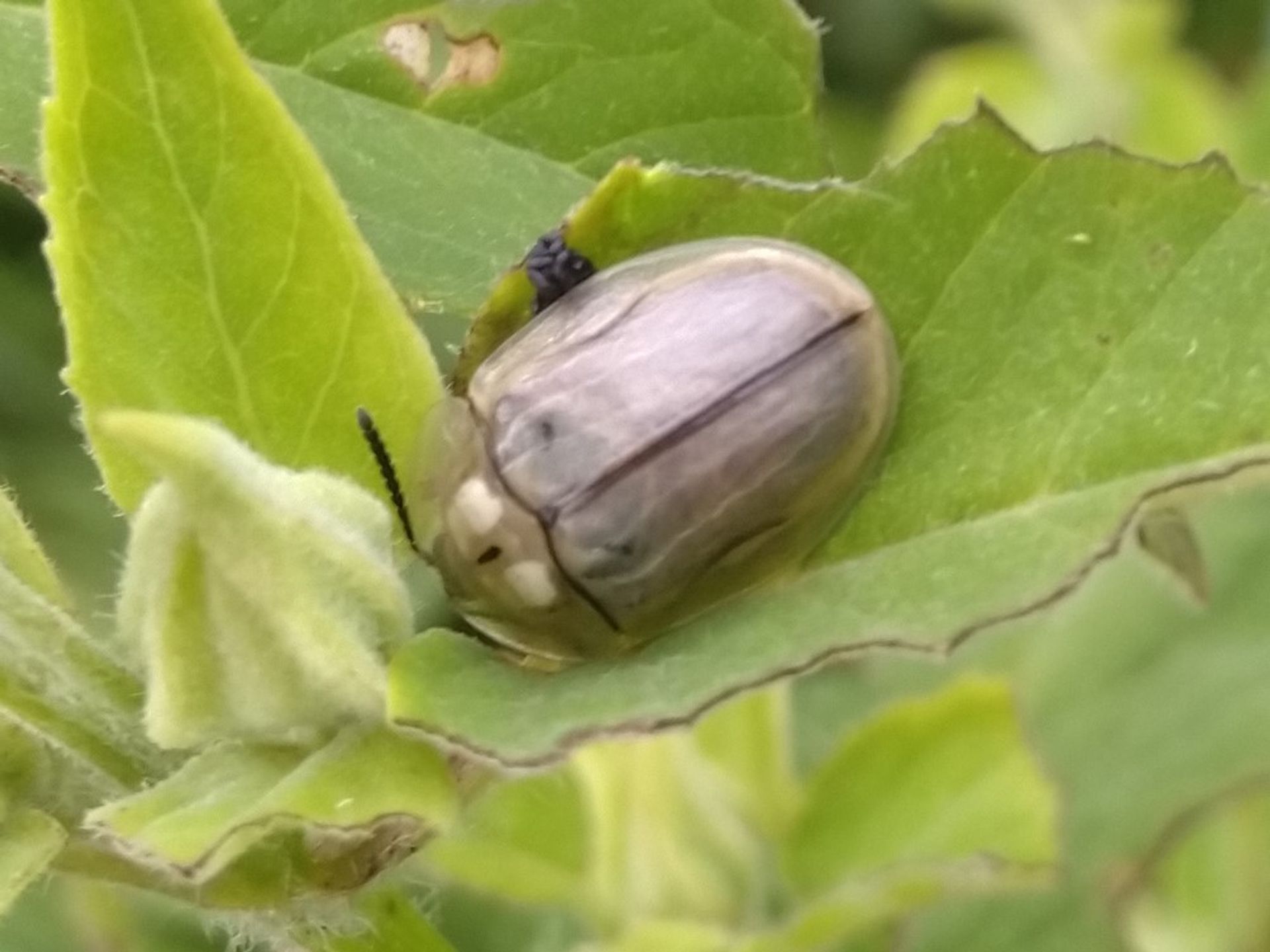
Physonota unipunctata is a leaf beetle in the Chrysomelidae, commonly known as the horsemint or beebalm . The is native to North America and has been documented from Canada to the United States. Historical taxonomic work from the late 19th century clarified species boundaries among related forms described by early American entomologists. The shows seasonal tied to plant , with appearing in June in the Montreal region.
Pronunciation
How to pronounce Physonota unipunctata: /ˌfaɪsəˈnoʊtə ˌjunɪpʌŋkˈtɑːtə/
These audio files are automatically generated. While they are not always 100% accurate, they are a good starting point.
Images
Habitat
Open woodlands and areas where plants (Monarda , commonly called horsemint or beebalm) occur. Historical records from the Montreal region indicate association with localities where the food plant grows.
Distribution
North America. Documented from Canada (Manitoba, Ontario, Quebec/Montreal region) and the United States. GBIF records confirm presence across North America.
Seasonality
appear in June in the Montreal region, with early May searches finding plants not yet emerged above ground. This suggests a seasonal tied to host plant development.
Host Associations
- Monarda species (horsemint/beebalm/bergamot) - food plant directly reference this association
Life Cycle
First appears in June based on historical field observations from Quebec. Early season searches in May found plants not yet emerged, indicating or pattern with synchronized with host plant availability.
Similar Taxa
- Other Physonota speciesHistorical taxonomic confusion with forms described by Say, Randall, and Walsh & Riley that were later clarified as or distinct
More Details
Taxonomic history
The was subject to considerable taxonomic debate in the late 19th century regarding supposed varieties described by different authors. A detailed study published in The Canadian Entomologist in 1886 helped clarify these boundaries.
Subspecies
Two are recognized: Physonota unipunctata arizonae Schaeffer and Physonota unipunctata unipunctata.